
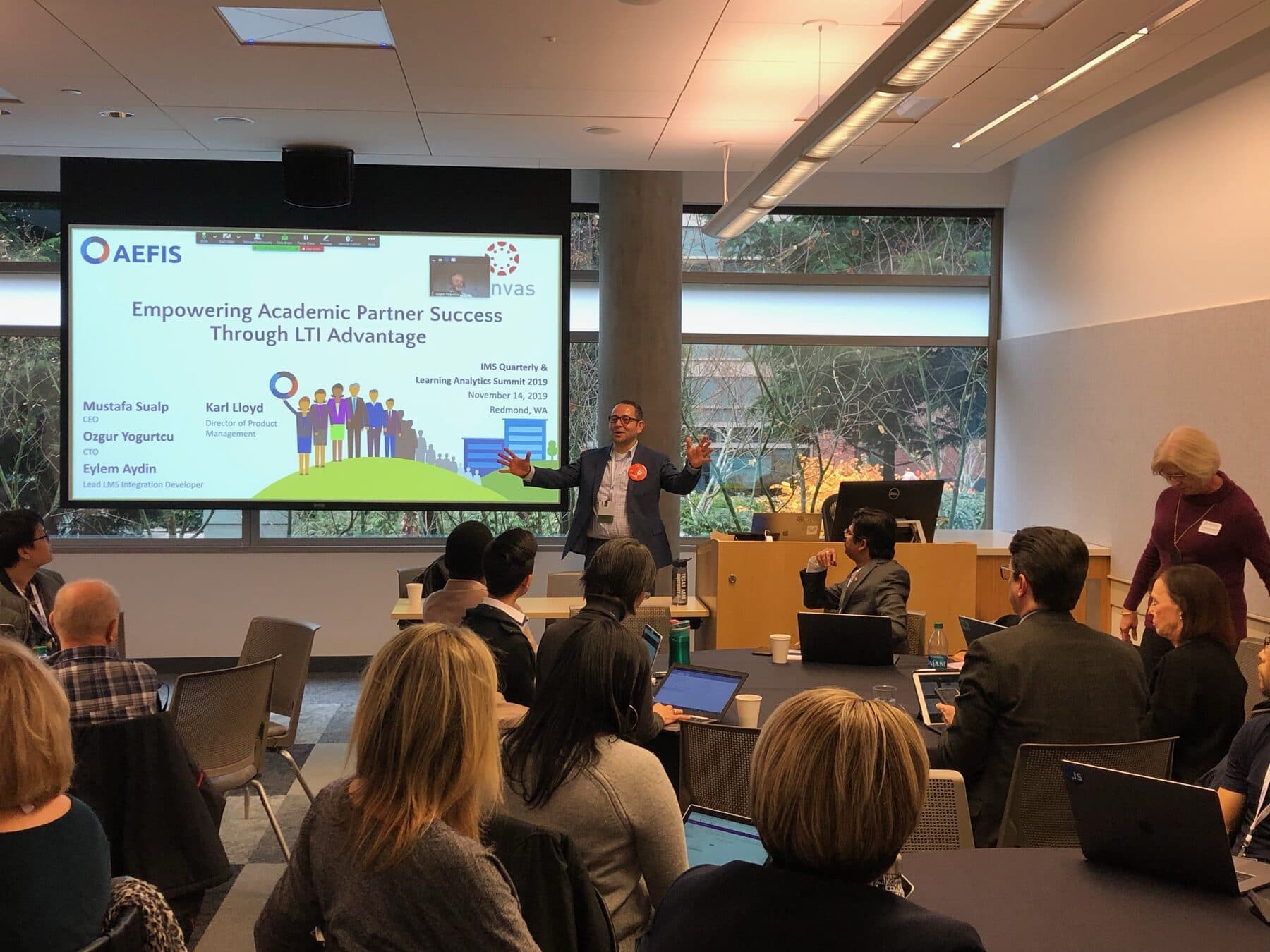
The first thing AEFIS taught me was that people do not resist change as much as founders think they do.
They resist tools that do not understand their work.
When we started building for higher education assessment, the common wisdom was that universities were too slow, too complex, and too resistant to adopt meaningful software. There was some truth in that. Higher education does not change just because a founder shows up with a pitch deck and a confident story.
But the deeper truth was different.
Educators and assessment leaders were not protecting the old way because they loved spreadsheets, manual reporting, and accreditation stress. They were protecting their work from shallow tools that promised transformation while ignoring the reality of institutional life.
Once we understood that, AEFIS became a different company.
The real problem was human
On the surface, assessment looked like a software problem.
Data lived in too many places. Reporting took too long. Accreditation cycles created enormous administrative pressure. Institutions needed better systems.
But the real problem was more human than technical.

Faculty needed to trust the process. Assessment leaders needed workflows that reflected how institutions actually operate. Administrators needed evidence without turning everyone into data-entry clerks. The product had to respect the academic mission, not just automate compliance.
That lesson still shapes how I think about AI.
The best technology does not ask people to become someone else in order to use it. It meets them inside the work they already care about and removes the friction that keeps them from doing it well.
Lesson one: the buyer cares about relief, not architecture
Founders love architecture.
Customers care about relief.
At AEFIS, the winning conversation was not about our stack. It was about giving people their time, clarity, and confidence back. Could they prepare for accreditation without chaos? Could they see what was improving? Could they help faculty close the loop on learning outcomes?
That is the same lesson I see in AI now.
The market is full of impressive model talk, context-window comparisons, agent demos, and benchmark screenshots. Those things matter, but they are not the customer's emotional center.
The customer wants to know:
- Will this help my team think more clearly?
- Will this reduce re-explaining?
- Will this preserve context?
- Will this make follow-up easier?
- Will this stay trustworthy when real work is on the line?
If the answer is no, the technology does not matter enough.
Lesson two: listen long enough to be useful
The early years of AEFIS forced patience.
We had to listen before we could build well. We had to understand the calendar of the institution, the language of assessment, the politics of change, and the moments when the work became painful.
That kind of listening is not glamorous, but it is a competitive advantage.
AI is moving much faster than EdTech did, but the human adoption problem has not disappeared. If anything, it is more important. The technology is powerful enough that teams can easily adopt the wrong workflow quickly.
Speed matters. But speed without understanding creates noise.
The companies that win in AI collaboration will not simply ship the most features. They will understand where context breaks, where trust breaks, and where teams lose continuity.
Lesson three: learning is social and contextual
Education taught me that learning is rarely just information transfer.
The best teachers adapt. They notice confusion. They build from prior knowledge. They create shared context. They help people move from exposure to understanding.
That is also what good AI collaboration should do.
Most AI tools still behave like isolated answer engines. A person asks. The system responds. The output may be useful, but the learning remains private and fragile.
In real teams, understanding needs to be shared. The group needs to know why a decision was made, what alternatives were rejected, what assumptions remain open, and what should happen next.
That is why I see such a strong connection between EdTech and AI collaboration.
Both are ultimately about helping humans learn, decide, and improve together.
After the exit
After AEFIS, I had time to ask what kind of problem was worth building for next.
AI was becoming impossible to ignore. The models were improving quickly. The demos were remarkable. But I kept noticing the same gap I had seen in education: powerful technology did not automatically create better work.
People were using AI in private tabs. Teams were pasting outputs into other tools. Context was being rebuilt over and over. The intelligence was impressive, but the collaboration pattern was still immature.
That felt familiar.
It reminded me of the early assessment market: lots of tools, lots of claims, not enough respect for the human system around the work.
The same mission, a bigger surface
Sociail is not AEFIS 2.0. The market, technology, and speed are completely different.
But the founder lesson is the same.
Build for the human system.
In education, that meant understanding how institutions improve learning over time.
In AI collaboration, it means understanding how teams think, decide, preserve context, and follow through when AI becomes part of the room.
The technology is only valuable if it helps people do the work they came to do.
That is the throughline from EdTech to AI for me: do not build tools that make people feel smaller. Build systems that give people more room for judgment, creativity, trust, and meaningful progress.