Professional journey

The long arc.

Roughly two decades of building, told in chapters. Each one taught me something I am still using. The lessons are compounding; so, slowly, is the work.

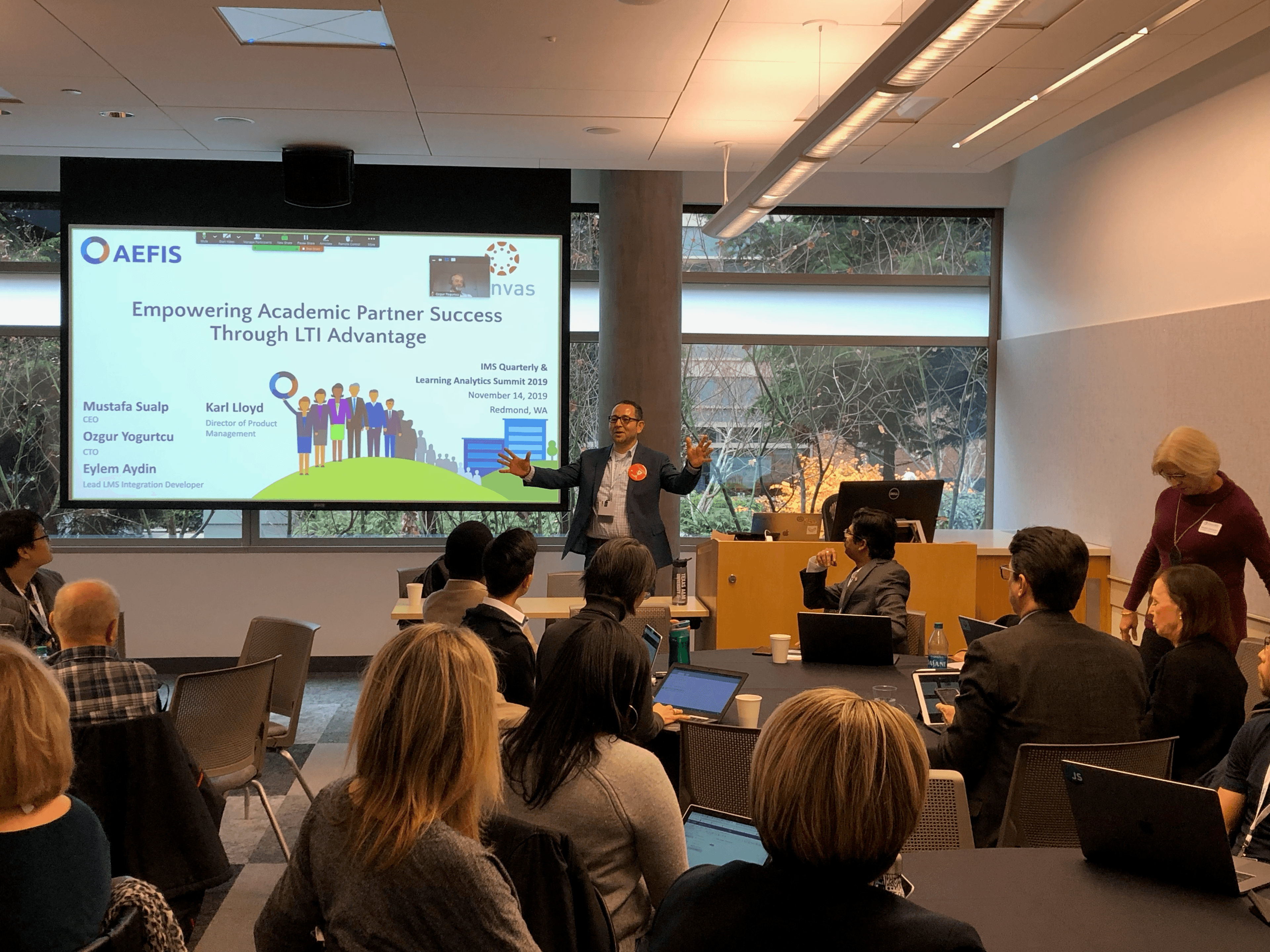
Mustafa Sualp speaking at the IMS Global Learning Analytics Summit, 2019.
Speaking at the IMS Global Learning Analytics Summit, mid-AEFIS.2019 · A chapter from the middle
Contents

Six chapters.

  1. 2003-2011Drexel, and a first company while still in collegei.
  2. 2012-2016Founding AEFIS, the assessment platformii.
  3. 2016-2020Growth, the Philadelphia 100, and a market we changediii.
  4. 2020-2021A pandemic, a transformation, and an exitiv.
  5. 2022-2024The quiet years and the thesisv.
  6. 2024-nowSociail and the second actvi.

A first company, in a dorm room, with no idea what I was doing.

I went to Drexel University to study commerce and engineering - a combination that, in retrospect, set the tone for every company I have built since. While I was still in school, I started a small managed-technology-services company that worked with regional organizations. It was a good business that I ran with no training, no mentor, and a great deal of stubbornness.

What I learned in those years had almost nothing to do with technology and everything to do with what it feels like to be responsible for an outcome. Clients are not patient with your education. Payroll is not patient with your education. The work either gets done or it doesn't.

Being responsible for an outcome is the only school I have ever fully attended.

What stayed with me

  • Clients are the curriculum. Pay attention.
  • Bootstrapped early teaches what funded later can hide.
  • Most "talent" is just willingness to look at a hard thing for longer than feels reasonable.

Founding AEFIS, with three people and a stubborn idea.

In 2012 I founded AEFIS - an assessment management platform for higher education. The premise was simple and unfashionable: universities were measuring the wrong things, in the wrong ways, and the existing tools treated assessment as a feature rather than a craft.

We started with three people. We bootstrapped. We were insistently unsexy in a market full of glossy EdTech ambition. For a long stretch, the company looked like very little was happening - which is the texture of slow compounding work when you're inside it.

What we were doing, quietly, was earning the right to be serious. We were learning the institutional language of higher ed, the politics of accreditation, the way that decisions actually get made on a university campus. There is no shortcut for that.

What stayed with me

  • The slow years are the years. Don't apologize for them.
  • Mission-driven teams outlast clever ones.
  • Domain language is a moat that is invisible until you cross it.

Growth, recognition, and a market we genuinely changed.

Between 2016 and 2020, AEFIS became something we hadn't quite imagined when we started. We were named to the Philadelphia 100® twice - first in 2016 and again in 2017 - as one of the region's fastest-growing private companies. More importantly, the way that leading universities thought about assessment had begun to shift, and we had something to do with that.

I keep one image from that period: standing in front of a room full of provosts and assessment directors who, a few years earlier, hadn't returned my emails. They had questions. They had problems we were uniquely positioned to solve. The slow work had quietly built a relationship with the field.

You don't notice the moment the market starts trusting you. You only notice that one day, it does.

What stayed with me

  • Trust is a compounding asset. Spend it carefully.
  • Awards are nice. The room being full is the real signal.
  • Markets shift quietly, then all at once.

A pandemic, a transformation, and an exit.

The pandemic compressed years of organizational change into weeks. We rebuilt AEFIS as a fully distributed company across three continents, redesigned how the team collaborated, and emerged - against most reasonable expectations - significantly more productive than before. The team's resilience in that stretch is one of the things I will carry with me for the rest of my career.

The numbers, written down now, look almost too clean.

72%

Growth during pandemic

32 to 55

Universities in 18 months

~$4M

ARR before PE exit in 2021

In 2021 we sold the company to private equity after reaching about $4M ARR, producing meaningful returns for early angel and seed investors. The exit is the line on the resume. The chapter is what built the people I most want to keep working with.

What stayed with me

  • Crisis is a forcing function. Use it honestly.
  • Distributed work, done deliberately, can be better than co-located.
  • The exit is a moment. The team is the lesson.

The quiet years, in which a thesis was forming.

After the AEFIS exit, I stepped back from operating for a while. I read, wrote, and spent time with operators, technologists, researchers, and people thinking seriously about AI, organizations, and human work. Some of those essays were private notes at the time, and a few have started to become useful now.

What was forming, slowly, was a category. AI was beginning to do extraordinary things at the individual level - and almost nothing at the team level. The miracles were private. The work, at the level of organizations, was still being done the same old way. That gap is the thing I could not stop thinking about. It eventually had a name: Shared Intelligence.

What stayed with me

  • Time off is research. Take more of it than feels responsible.
  • The best questions arrive on long walks.
  • A category is not a marketing decision. It's an honest answer to what is the work?

Sociail, and the second act.

I started Sociail to build the thing the essays kept pointing to: a shared workspace where people and AI teammates work from the same room, against the same memory, in the same permissioned context. The first act, AEFIS, was about changing how universities measure what students learn. The second act, Sociail, is about changing what it means for a team to think.

We are pre-launch as of this writing. The infrastructure is running. The first collaboration architecture is in place. The product surface is being polished through active Design Partner projects with teams already doing serious AI-heavy work. Early Access opens June 1, 2026.

If the first chapter was about being responsible for an outcome, and the long middle chapters were about earning the right to be serious in a domain, this chapter is about building something I have wanted to use for years - and hoping that a small, opinionated group of people want to use it too.

What I'm betting on this time

  • Most of the value of AI at work is shared, not solo.
  • Trust is an architecture, not a marketing claim.
  • Slow, opinionated launches outlast big ones.
Onwards and upwards. The arc is long, but it bends if you keep walking.
Mustafa Sualp
Founder Journey: From AEFIS to Sociail