
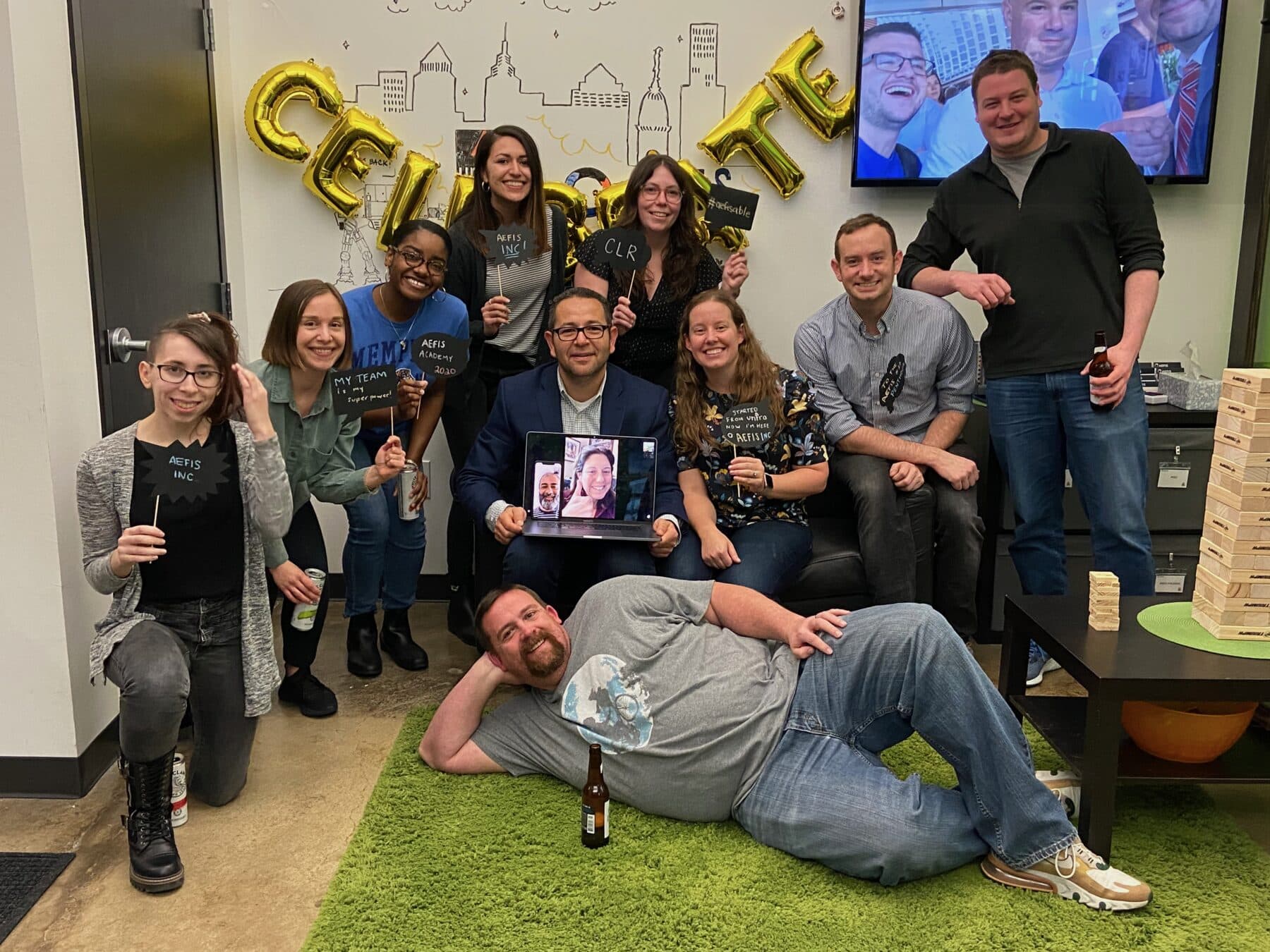
AEFIS taught me that constraints are not a footnote in company building. They are often the thing that makes the company sharper.
For the first three years, I paid myself very little. We were building for universities, which meant long sales cycles, careful buying committees, accreditation pressure, and a market that did not reward hype. We eventually reached 55+ institutions, supported a large student population, and exited to private equity.
The outcome mattered. The lessons mattered more.
1. The customer problem is usually less glamorous than your idea
Early on, I thought the opportunity was to build a broad platform for assessment and institutional effectiveness.
That was directionally right, but too abstract.
The customer pain was more concrete. Assessment leaders were buried in evidence collection, reporting cycles, accreditation preparation, faculty follow-up, and disconnected workflows. They did not wake up wanting a category-defining platform. They wanted to stop rebuilding the same evidence story under pressure every cycle.
That changed how we built.
The lesson was simple: do not sell the architecture before you have earned the workflow.
2. Patient markets punish impatience
Universities do not buy like startups.
Our first serious deals took a long time. There were committees, budget cycles, internal politics, procurement processes, and a lot of trust-building. It was tempting to see that as friction to fight.
Eventually, I learned to see it as part of the product environment.
If the market moves slowly, your GTM has to respect that. Your proof has to travel across stakeholders. Your implementation has to reduce risk. Your messaging has to make the buyer feel safer, not just excited.
Patience became a competitive advantage because many competitors could not afford it.
3. Overbuilding is bad. Building ahead of trust is different.
Founders are correctly warned not to overengineer too early.
But in some markets, underbuilding is fatal. If the buyer is trusting you with institutional evidence, accreditation workflows, reporting history, or other high-stakes records, the product cannot feel improvised.
At AEFIS, we had to build with more operational discipline than our stage might have suggested. Reliability, data integrity, permissioning, and reporting quality were not later-stage luxuries. They were part of the trust contract.
That lesson carries directly into AI.
If you want people to collaborate with AI in meaningful work, trust boundaries cannot be decorative. They have to be in the product.
4. Hire people who have felt the pain
In a resource-constrained company, every hire changes the company.
The best early team members were not just talented. They understood the problem from the inside. They had worked around broken systems. They knew the cost of manual evidence collection and institutional reporting. They cared because the pain was not theoretical.
That kind of empathy is hard to fake.
It made the product better, the sales process more credible, and the company more resilient.
5. Partnerships can outperform brute-force sales
We did not have the largest sales team.
So we found places where the market already gathered. Assessment communities, institutional effectiveness groups, conferences, peer networks, and trusted practitioners mattered more than generic outbound volume.
The best partnerships were not logo trades. They created proximity to real problems and real language.
That shaped how I think about launch strategy now. A wedge works when it enters through an urgent, visible workflow, not just through a clever story.
6. The founder has to translate between ambition and proof
The long-term vision for AEFIS was always bigger than the first use case. But the company became real by earning one proof point at a time.
That balance is still the job.
You need ambition big enough to matter and proof narrow enough to believe.
With Sociail, I think about that constantly. Shared Intelligence is a large idea. The product has to prove it through bounded, visible work: shared context, room-aware AI participants, durable outputs, trust boundaries, and approval-visible follow-through.
That is the AEFIS lesson applied to AI.
What I carry forward
Bootstrapping AEFIS made me less impressed by elegant strategy that cannot survive customer reality.
It made me more patient with markets that require trust.
It made me more serious about the gap between a platform vision and the first workflow that earns the right to become one.
And it made me believe that constraints, handled honestly, can become a founder's best operating system.