

A team leaves a customer call with the same problem it had before the call started.
Not because the call was bad. The customer was clear. The founder heard the urgency. Product noticed the missing workflow. Engineering caught the integration risk. Someone asked the right follow-up question. Someone else heard the objection that mattered.
Then the work scattered.
The transcript went into one tool. The founder pasted a few notes into an AI tab. Product opened a separate thread to draft requirements. Engineering summarized the technical risk in Slack. Sales wrote a follow-up email from memory. By the next morning, everyone had a useful fragment, and nobody had the whole shape of the decision.
That is the problem the first wave of AI did not solve.
Private AI made individuals faster. It did not automatically make teams smarter together.
You can see this everywhere now. A founder has one AI conversation. A teammate has another. A customer conversation lives in a transcript. The real decision happened in a meeting. The correction happened later in chat. The AI that helped create the first draft cannot see the objection that changed the plan.
Everyone moves faster.
The work still fragments.
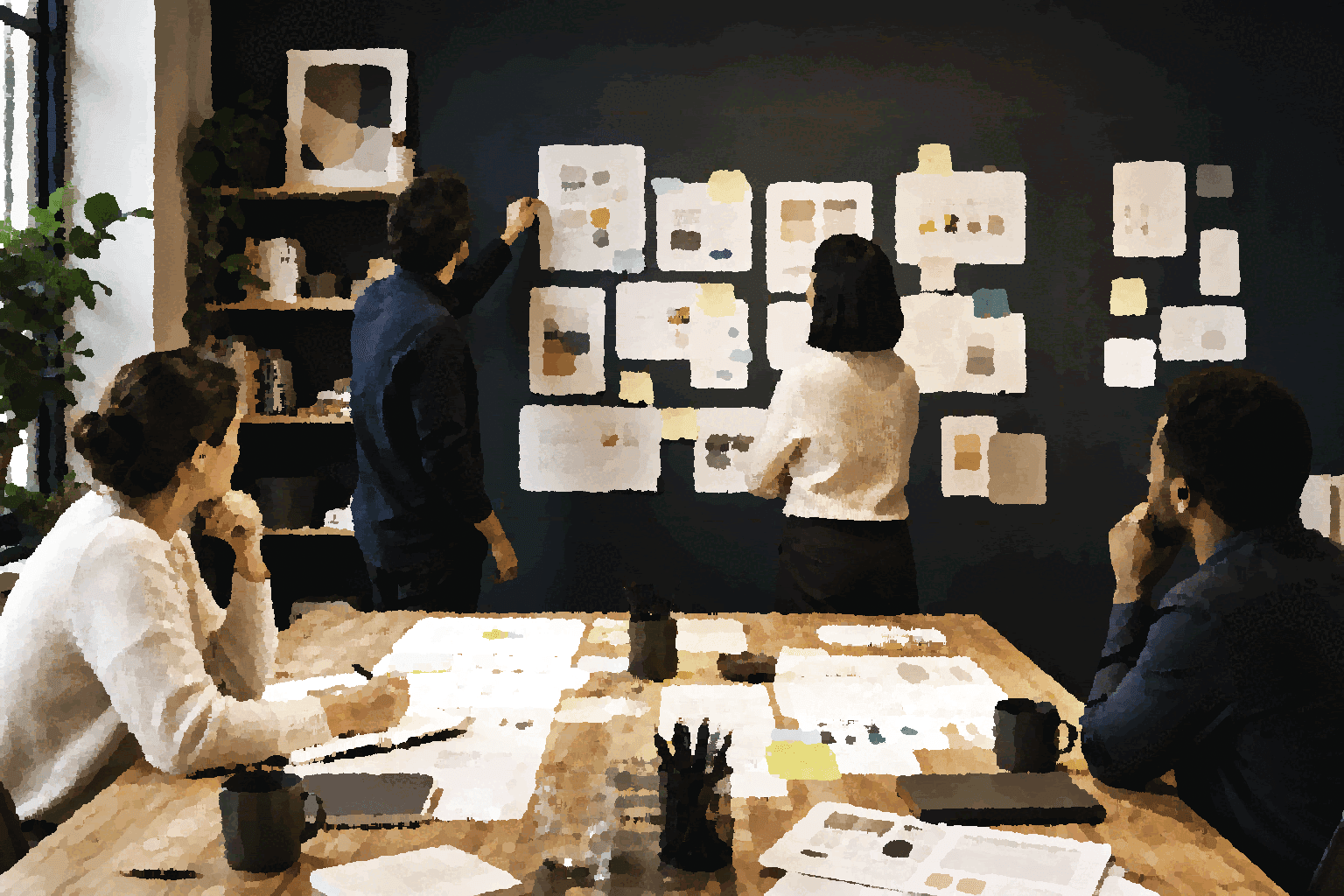
Shared Intelligence starts with a simple question: what if the work had a room?
I do not mean a chat room with a smarter sidebar, a document with comments, or an always-on surveillance layer. I mean a visible, permissioned place where people and AI participants can work from enough of the same context to think, decide, create, correct, and carry the work forward.
That is the shift I mean by Shared Intelligence: not smarter private prompts, but shared work that can remember, adapt, and stay accountable.
The missing layer is the room
Most AI debates still orbit the model.
Which model is smarter? Which one is cheaper? Which one has the bigger context window? Which one writes better code? Which one passes more benchmarks?
Those questions matter. They are not enough.
The harder problem starts when AI leaves the private prompt and enters real work. Real work has people, roles, timing, half-finished thoughts, source material, unresolved tension, approvals, exceptions, and consequences. A model can produce an impressive answer without knowing who owns the decision, what context is allowed, what changed yesterday, or what should become durable after the conversation ends.
That missing layer is not intelligence in the abstract.
It is collaboration design: who sees what, who can act, what becomes memory, what needs approval, and how work survives the moment.
A shared room gives the work a place to hold its shape. It can show who is involved, what problem is being worked, which context is visible, what has already been decided, what remains uncertain, and where human approval is required before anything leaves the room.
That sounds practical because it is. The future of AI collaboration will not be decided only by who has the strongest model. It will be decided by whether teams can keep context, authority, memory, and action connected without turning the workplace into a monitoring system.
Conversation is not the prelude
Important work usually begins before it is clean enough for software.
It begins in a car conversation, a tense customer call, a late-night founder note, a product review, a disagreement between engineering and sales, or the moment someone finally says the thing everyone has been dancing around.
Traditional software treats that moment as temporary. Maybe it becomes a transcript. Maybe it becomes a summary. Maybe someone copies three bullets into a document. Usually, most of the intelligence disappears.
That is backwards.
Conversation is not the prelude to the work. Conversation is the work beginning to take shape.
The best ideas are often born before they are polished. The best decisions often emerge through friction. The most important context is often carried in sequence: who raised the concern, what changed the room, which objection survived, what tradeoff people accepted, and what still felt unresolved.
A good shared-intelligence system should help people turn chosen parts of that mess into living threads, durable artifacts, and responsible follow-through.
Chosen is the key word.
Not surveillance. Not endless recording. Not every private moment converted into data because the system can do it.
Permissioned continuity.
That is the useful breakthrough.
Memory has to be governed
AI memory is powerful. It is also dangerous if handled lazily.
A system that forgets everything forces humans to rebuild context forever. A system that remembers everything becomes creepy, noisy, and impossible to trust.
The useful middle is governed memory.
The memory that matters in collaboration is not simply what was said. It is what was decided, why it was decided, who approved it, what changed later, what should be corrected, and what should guide the next move.
That kind of memory should be visible and correctable. People should be able to say: remember this, forget this, keep this private, share this with the room, turn this into an artifact, or do not use this outside this context.
Without those controls, memory becomes extraction.
With those controls, memory can become trust.

Agents need jobs, not mystique
The word "agent" is already doing too much work.
Sometimes it means tool use. Sometimes it means autonomy. Sometimes it means a persona. Sometimes it means a worker replacement. Sometimes it is just a futuristic label on a script.
In shared work, an AI agent should be less mystical and more legible.
A summarizer is not an approver. A researcher is not a decision-maker. A drafting agent is not a legal authority. A code assistant is not a production release owner. A planning agent should not quietly turn speculation into execution.
This does not make AI timid. It makes AI useful enough to trust.
An AI participant needs a visible job: what it is helping with, what context it can use, what it can suggest, what it can change, what requires approval, and how humans can correct it.
That is not bureaucracy.
It is what lets more AI into the room without pushing people out of authority.
The loop is the product
The old unit of knowledge work was often the task.
Write the brief. Send the email. Create the ticket. Summarize the meeting. Draft the plan. Build the feature.
AI changes the shape of that work. The answer is only one moment. The real unit is the loop: intent, context, generation, review, decision, artifact, action, feedback, correction, and memory.
A good answer that never enters the right context is fragile. A strong summary that nobody trusts is noise. A useful artifact that dies after it is created is not intelligence compounding. It is output.
Shared Intelligence becomes practical when the right work survives the moment of generation: the source context, the tradeoff, the owner, the review point, the decision, and the next step.
When a team can return to that loop, the room becomes smarter. Not because the AI has become magical, but because the work has stopped losing itself.
Human authority has to stay real
"Human in the loop" is not enough.
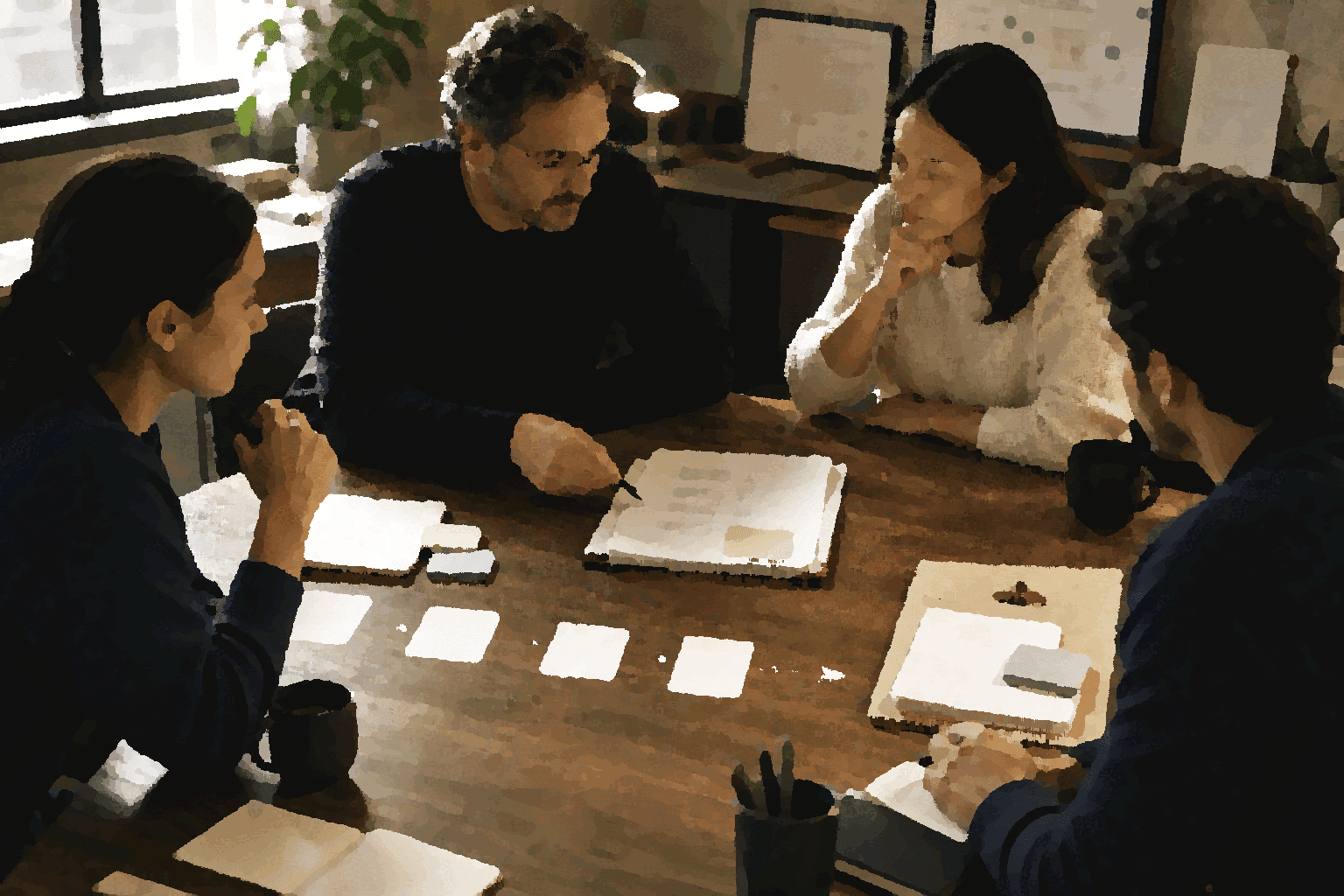
A person can be technically present and still not be meaningfully in control. If the human does not have context, timing, authority, and the ability to correct or stop the system, oversight becomes approval theater.
The goal is not to make people inspect every generated sentence or manually approve every harmless suggestion. The goal is to put human judgment where it matters most: framing, direction, exceptions, relationships, ethics, taste, and final authority.
AI should carry more of the coordination burden.
Humans should carry the responsibility.
That division is not anti-AI. It is the condition that makes deeper AI participation acceptable.

What this has to prove
Shared Intelligence is a large pattern, but serious products have to earn their way toward it.
The first proof should be narrower than the vision: one shared workspace, visible room context, useful AI participants, durable outputs, and bounded follow-through that remains under human authority.
That is also what the category has not earned yet.
It has not earned claims of full autonomy. It has not earned ambient intelligence everywhere. It has not earned complete memory. It has not earned every integration. It has not earned the right to act without review just because a model sounds confident.
The standard should be simpler and harder:
- Can the room preserve the context that matters?
- Can people see what the AI used, suggested, and changed?
- Can a messy conversation become a useful artifact?
- Can follow-through be prepared without pretending approval has happened?
- Can memory be helpful without becoming invasive?
If the answer is yes in one bounded workflow, the platform can expand from proof instead of promise.
The manifesto, made practical
I believe the next step in AI is not one person prompting one assistant in one private tab.
I believe the more important shift is people and AI participants working together from shared, permissioned context.
I believe conversation should become a first-class work surface.
I believe memory should be chosen, bounded, correctable, and useful.
I believe agents should have visible roles and limits.
I believe trust belongs inside the product experience, not only in policy documents.
I believe AI can carry more coordination burden so humans can do more of the human work.
And I believe the future worth building is not artificial intelligence alone or human intelligence alone.
It is a collaboration layer where minds can meet, work can survive the moment, and people remain responsible for what moves forward.
That is the promise of Shared Intelligence.