

A customer thread comes in with a partial transcript, three interpretations, and a next step nobody quite owns.
In the weak pattern, one teammate leaves the room, opens a private AI window, rebuilds the context, gets a polished answer, and brings it back as a recommendation the rest of the team now has to reverse-engineer.
In the better pattern, the AI support stays inside the shared work. The source context is visible. The owner is named. The review point is clear. The next step is bounded.
The best AI integration is not invisible because it hides the work. It is invisible because the work no longer has to leave the room.
Mark Weiser's writing on ubiquitous computing captured a related idea decades ago: the best technology recedes into the background so people can focus on the task, not the interface. For AI collaboration, that principle needs one more constraint. Natural should not mean opaque.
The problem with AI islands
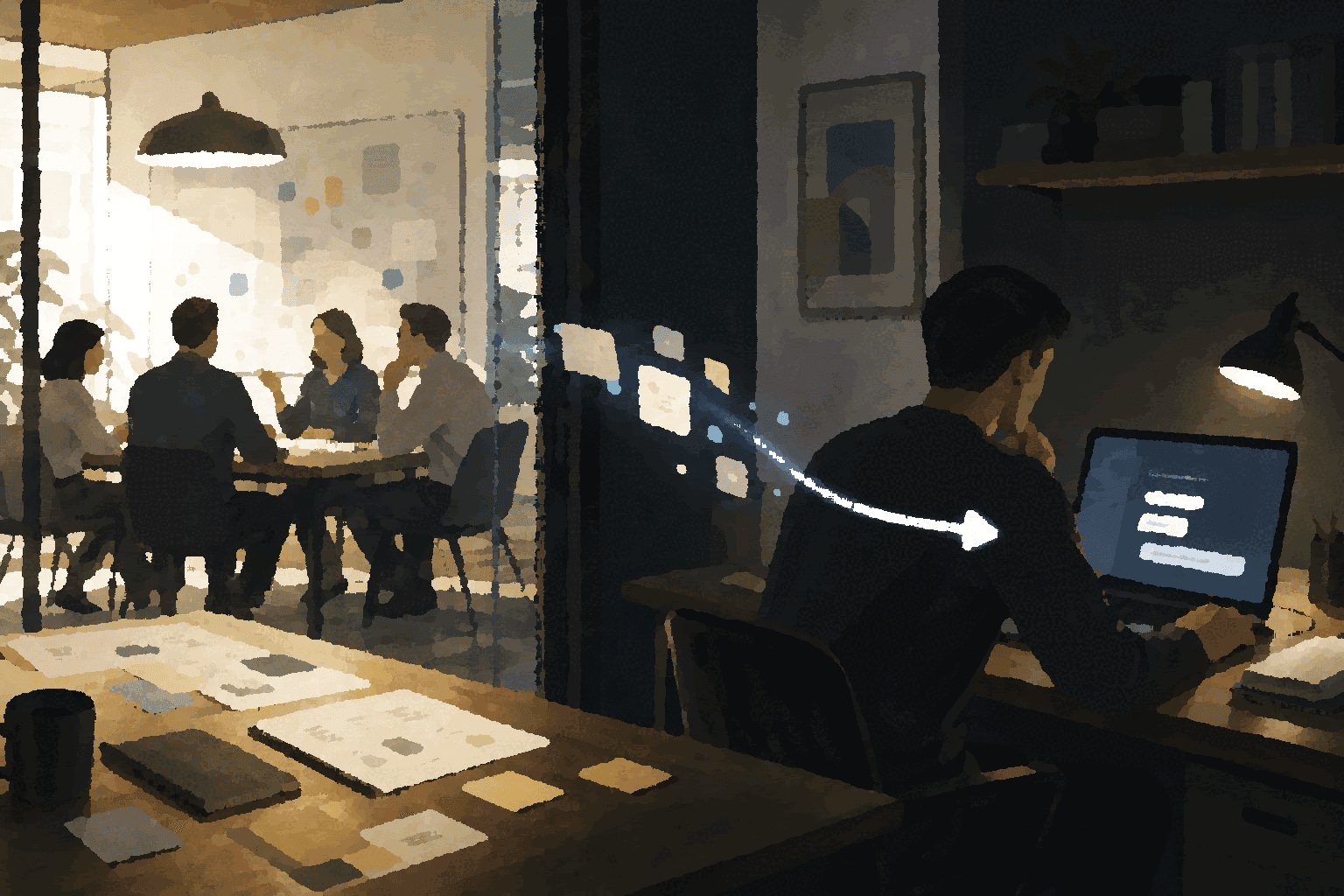
Current AI tools can be remarkable and still feel oddly separate from the work. A teammate leaves the project room, opens a private AI window, restates the background, asks for help, and copies the result back.
That loop has a cost. Context depends on what one person remembered to paste. Ownership gets blurry when the output returns without a visible trail of source material, assumptions, and review. Team memory stays thin when useful synthesis remains trapped inside an individual exchange.
Even powerful AI delivers less value than it could when the intelligence sits outside the shared work and the people affected by the answer cannot inspect the path that produced it.
The principles of invisible integration
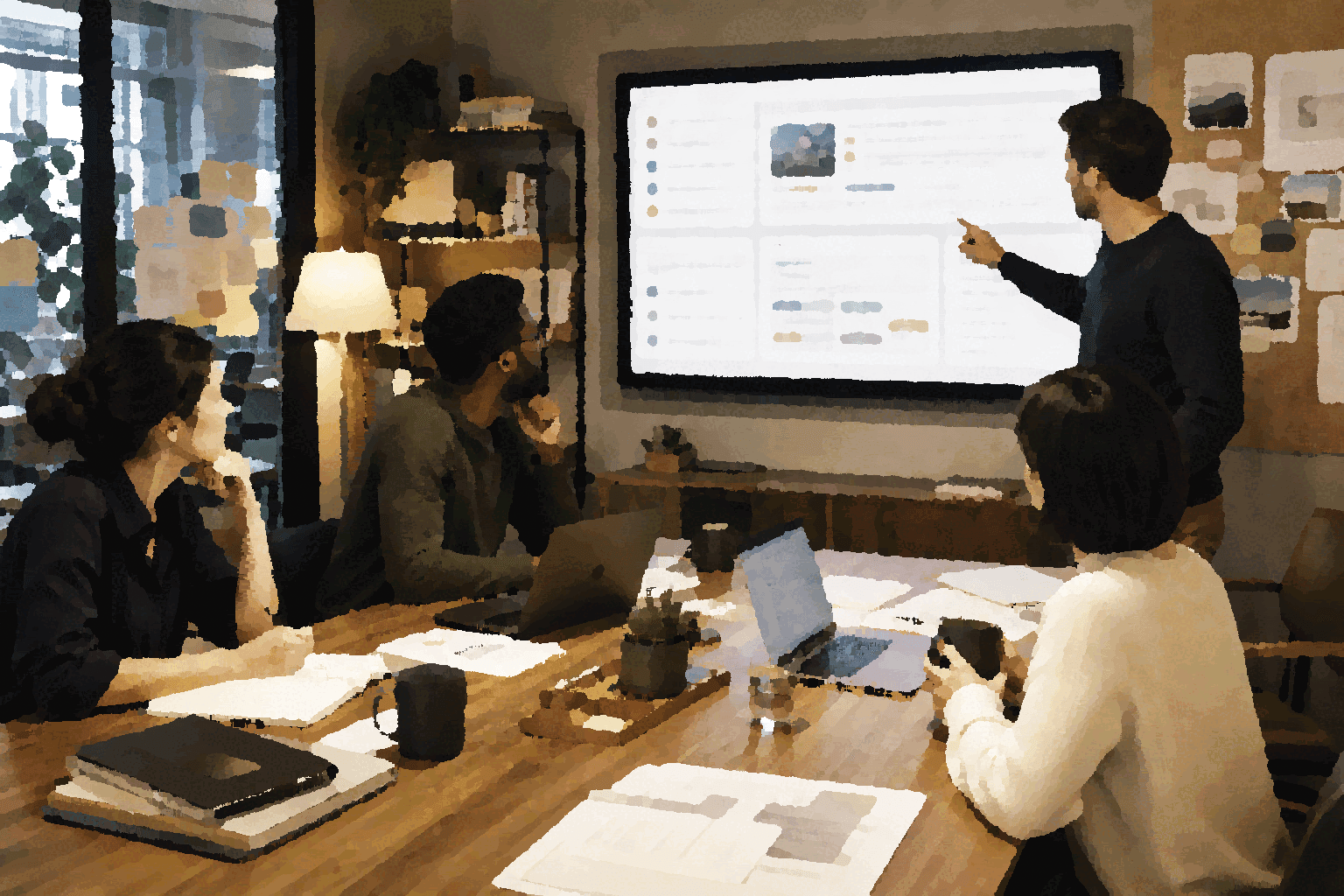
For AI to integrate responsibly into team work, a few principles matter:
-
Context preservation: AI should be able to work from permissioned, visible team context without requiring everyone to restate the same background.
-
Workflow continuity: Collaboration with AI should happen within existing workflows, not require context switching.
-
Collaborative memory: When the system is designed to preserve shared context, important decisions and artifacts should be easier to recover and reuse.
-
Natural interaction: Engaging with AI should feel conversational and intuitive, not technical.
-
Progressive disclosure: Complex capabilities should be available but not overwhelm the interface.
-
Visible ownership: People should be able to see who owns the output, what still needs review, and where AI support stops.
The important constraint is visibility. If the AI participant used a thread, document, transcript, or prior decision, the people in the room should be able to see that context. Invisible integration should remove friction, not hide authority.
Why chat is a useful starting point
Chat is not the perfect medium for every workflow, but it is a useful starting point because it already contains the shape of collaboration: turns, participants, questions, files, disagreement, decisions, and follow-up.
Most teams already coordinate through conversational surfaces. They ask for clarification, attach screenshots, drop links, and negotiate what should happen next. That makes room-based chat a natural place for AI to help, as long as the system treats the room as shared context rather than a private prompt box.
A good collaboration room is more than a chat log. It can hold source material, model output, human review, a decision, and the next bounded action in one visible place. Documents, issue trackers, dashboards, voice, calendars, and code tools still matter. But chat is often where the team first discovers what it actually needs to decide.
That is why open, room-based collaboration infrastructure is such a useful foundation for shared AI work.
The collaboration effect
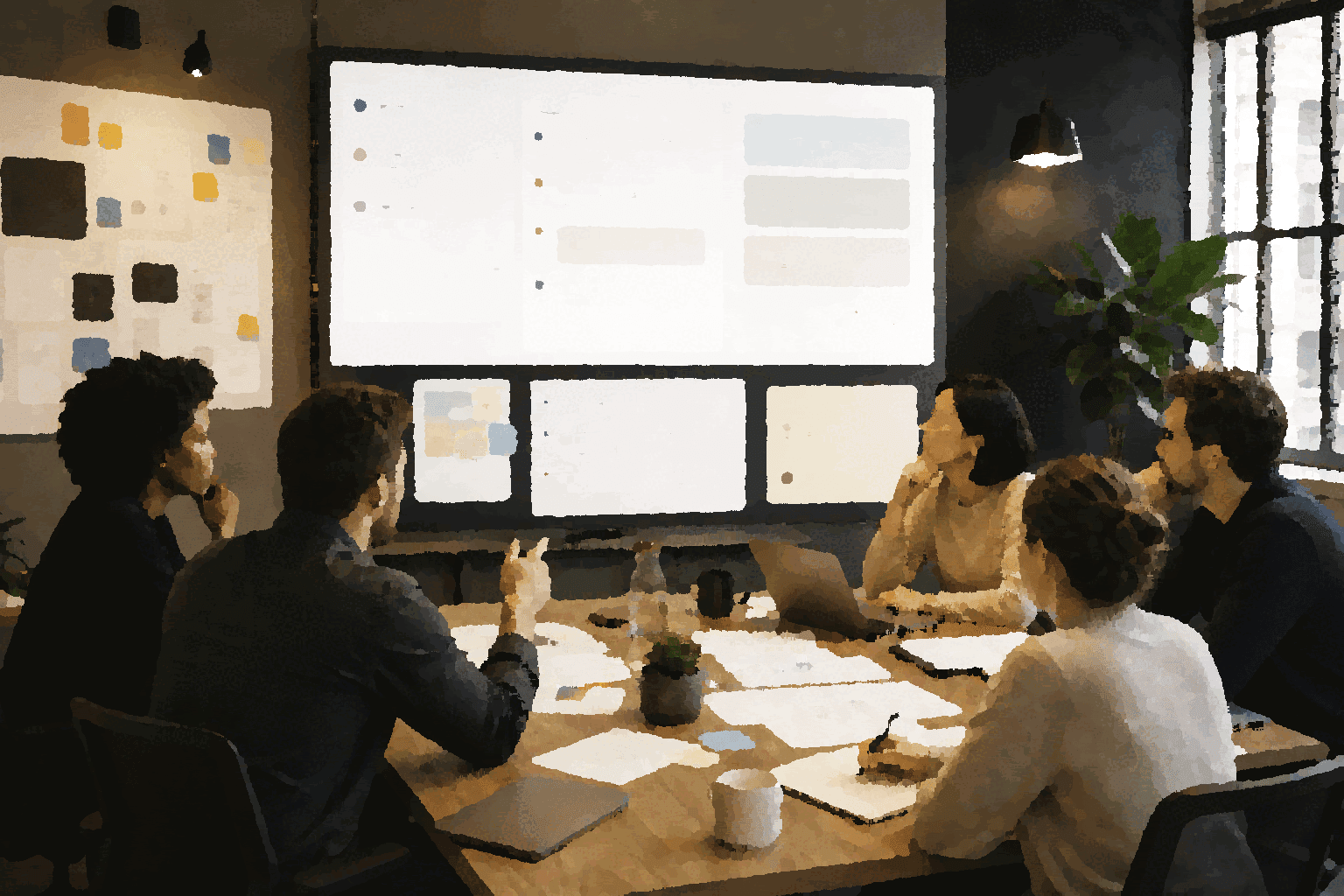
A customer thread comes in with scattered notes, a partial transcript, and three competing interpretations. In the island pattern, one person takes that mess to an AI tool, gets a polished answer, and brings it back as a recommendation the team now has to reverse-engineer.
In the integrated pattern, the AI participant assembles a visible synthesis inside the room. It points to the source context it used, names the open question, separates evidence from interpretation, and leaves an owner with a reviewable artifact. The next step is not vague momentum. It is a bounded action: send this customer summary, update this internal note, schedule this follow-up, or reject this interpretation because the evidence is too thin.
That is the collaboration effect: less re-explaining, less private synthesis, and more shared progress. When the system has permission to use the right context and the output stays visible, the team can spend less energy reconstructing the path and more energy judging what should happen.
The proof is not that the AI feels impressive. The proof is that the team can point to the work it improved.
Beyond individual productivity to team intelligence
The promise of invisible AI integration is not just individual productivity. It is the possibility of better team intelligence: more of the relevant context in view, fewer repeated explanations, and more durable decisions.
New team members should be able to understand why a decision was made. Institutional knowledge should not depend entirely on who remembers the old thread. Decision quality can improve when the team has easier access to relevant material, counterpoints, and prior commitments.
But this only works when the integration is disciplined. Shared context should be permissioned. Source use should be visible. Human ownership should remain clear. The goal is not to make AI feel like an invisible manager of the room. The goal is to make useful support feel native to the work while keeping the human authority legible.
The path to invisible integration
For teams looking to move toward shared human-AI collaboration, the journey involves:
-
Find the repeated context rebuilds. Look for places where people keep pasting the same background into separate tools.
-
Make source context visible. Show what the AI participant used, ignored, and could not access.
-
Name the owner and review point. Make accountability easier to see, not easier to avoid.
-
Save the artifact and next step. The output should become part of team memory: a reusable brief, decision, task, note, or follow-up.
Success should be measured by the work that improves around the model. Did the team avoid a context switch? Did a decision become clearer? Did the next step become easier to trust?
Conclusion
The next step in AI is not only more powerful models. It is better collaboration design around the models.
The goal is not hidden AI or invisible governance. The goal is AI support that feels natural because the context, output, ownership, and trust boundaries are visible.
This is the version of integration worth pursuing: less context switching, more shared context, durable outputs, and AI that supports the team without obscuring who owns the work. If the team cannot inspect what changed, the integration is not mature yet.