

Work is emotional, whether software acknowledges it or not.
A team can be technically aligned and still be tense. A plan can be logically sound and still feel unsafe to the people who have to execute it. A customer conversation can look successful in the notes while carrying hesitation that matters.
AI systems that support collaboration can work with visible, permissioned signals without turning them into psychological profiles.
But they also should not pretend to feel empathy, diagnose people, or quietly profile how people feel.
The responsible path is narrower and stronger: use emotional context to improve collaboration only when the signals are consent-based, explainable, limited, and clearly subordinate to human judgment.
Emotion is context, not a control surface
There is a useful version of collaboration support around emotional signals.
It can flag language in a decision note that shows an implementation concern was not addressed. It can preserve a customer-risk concern without claiming to know how the customer feels. It can help a facilitator see that one participant's objection was never resolved. It can suggest a more careful follow-up when a draft sounds defensive or dismissive.
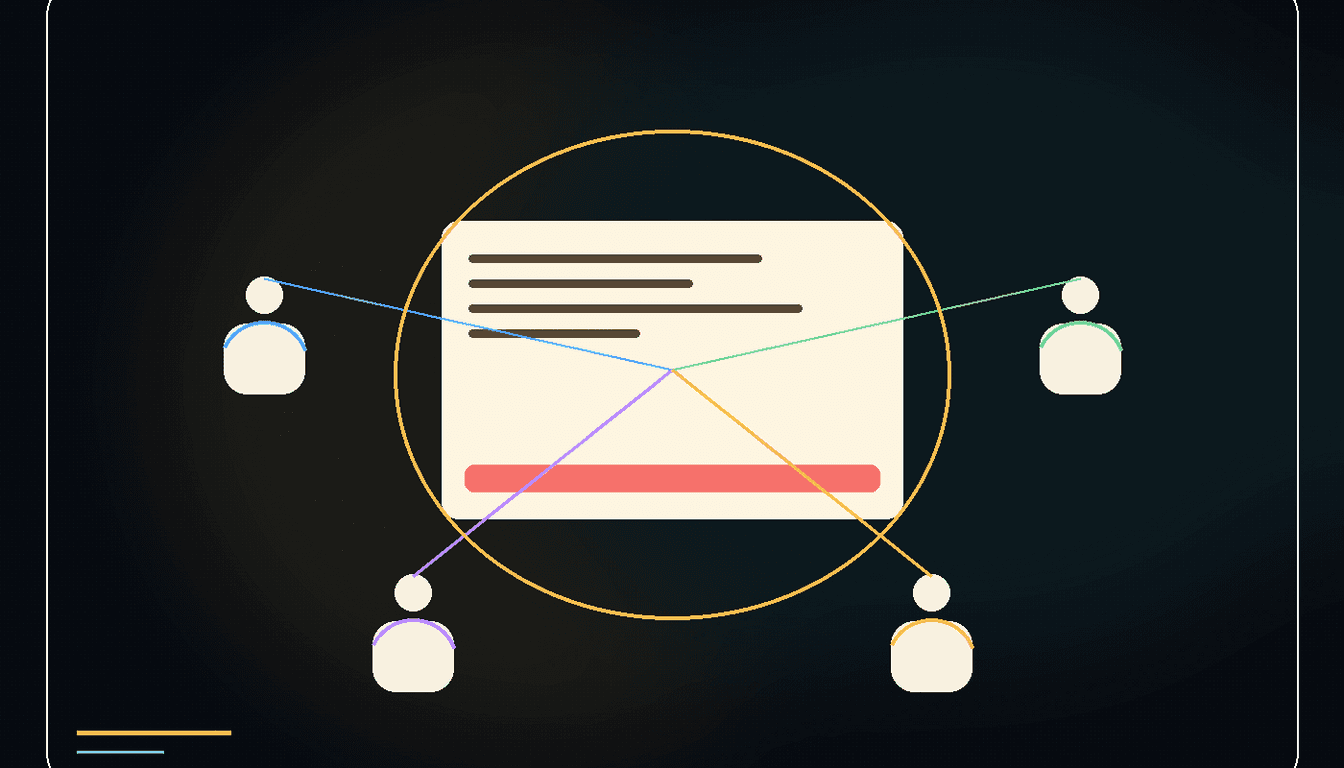
A release review can look aligned on the surface while one customer-risk concern remains unresolved. The useful AI move is not to say someone is anxious. It is to point to the artifact: the concern was acknowledged, no owner was assigned, and the follow-up draft sounds more final than the decision actually was. A human owner can then revise the note, ask for review, and approve or withhold the follow-up.
Those are collaboration aids.
They are different from an AI system that monitors workers, scores morale, predicts burnout, or nudges behavior without clear consent.
The first supports people. The second turns emotion into management data.
That line matters.
The danger of synthetic empathy
AI can produce language that sounds caring.
That does not mean it cares.
This distinction is not philosophical hair-splitting. If people start treating a system's emotionally fluent response as proof of understanding, they may trust it in situations where the system is only pattern-matching.
For serious work, the design should be honest:
- AI can help identify communication patterns.
- AI can help draft more considerate language.
- AI can help surface unresolved tension attached to the work.
- AI cannot own empathy.
- AI cannot replace human responsibility for care, trust, and repair.
That humility should be visible in the product.
What good looks like
Emotion-aware collaboration should be bounded by practical rules:
- Opt in before analysis. Teams should know what signals are used and why.
- Analyze artifacts, not people. "This decision note may not address the implementation concern" is safer than "Alex is anxious."
- Show the source. If the system flags tension, people should be able to inspect the language, artifact, or moment behind the flag.
- Avoid hidden scoring. Emotional signals should not become invisible performance analytics.
- Keep people responsible. AI suggestions should support facilitation, not replace it.
These rules make the feature less dramatic. They also make it more usable.
Why this matters for distributed teams
Remote and hybrid work reduced many informal cues.
Teams lose hallway calibration. They miss the difference between silence and agreement. They mistake directness for hostility, or politeness for commitment. They let concerns drift because nobody wants to slow the meeting down.
AI can help if it is attached to shared work instead of hidden people profiles.
It can ask, "Was this concern resolved?" It can preserve the objection in the decision brief. It can help a team write a follow-up that acknowledges risk instead of steamrolling it.
That is emotional intelligence in service of shared context.
The product implication
The important product idea is not "emotionally intelligent AI" as a grand claim.
The important idea is collaboration that respects human signals.
Room-aware AI participants should treat visible signals such as tone, disagreement, unresolved questions, and explicit hesitation as part of the work. But they should handle those signals with consent, visibility, and restraint.
The goal is not to make AI feel human.
The goal is to help humans collaborate with more awareness, less rework, and clearer trust boundaries.
That is the version of emotion in the loop worth building.