
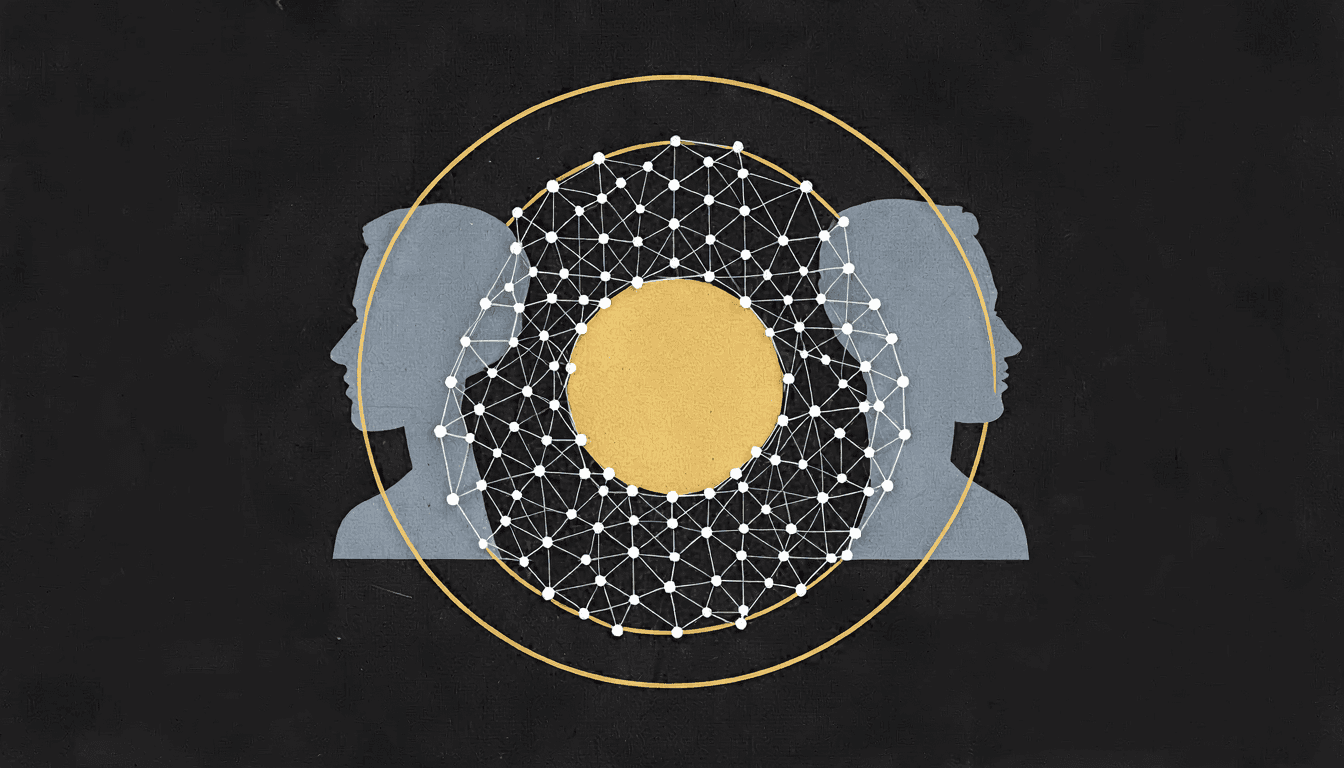
"Thought Mesh" can sound too grand if it is not grounded.
The useful version is simple: people and AI participants working around the same context, with clear roles, durable artifacts, and bounded follow-through.
That pattern matters because most AI work today is still point-to-point. One person asks one model for one output. The output may be good, but it is not automatically part of the team's shared memory or operating rhythm.
A mesh starts when the work becomes shared.
It becomes believable when trust stays visible too: who is participating, what role each participant is playing, what is still draft versus approved, and what kind of follow-through is actually allowed.
What a mesh is not
It is not an unbounded agent swarm running the company.
It is not a hidden network of AI decisions.
It is not a claim that the whole AI stack, tool stack, and workflow stack are connected on day one.
And it is not a replacement for human judgment.
Those claims make the architecture sound bigger while making the product less believable.
What a mesh should mean
A practical thought mesh has four pieces:
- Shared context. People and AI participants can see the relevant room history, files, decisions, and constraints.
- Role clarity. Each participant has a visible purpose: summarize, challenge, draft, inspect, plan, review, or approve when human authority is required.
- Durable artifacts. The result becomes a brief, plan, checklist, decision, or output the team can keep using.
- Bounded action. Follow-through is visible, approval-aware, and scoped to what the system can safely do.
In other words, a thought mesh is not just many AI participants in the same place. It is a shared-work pattern with explicit roles, visible trust, and outputs that can compound instead of disappearing into one-off chats.
That is enough to change how teams work without overselling autonomy.
Why multiple agents help
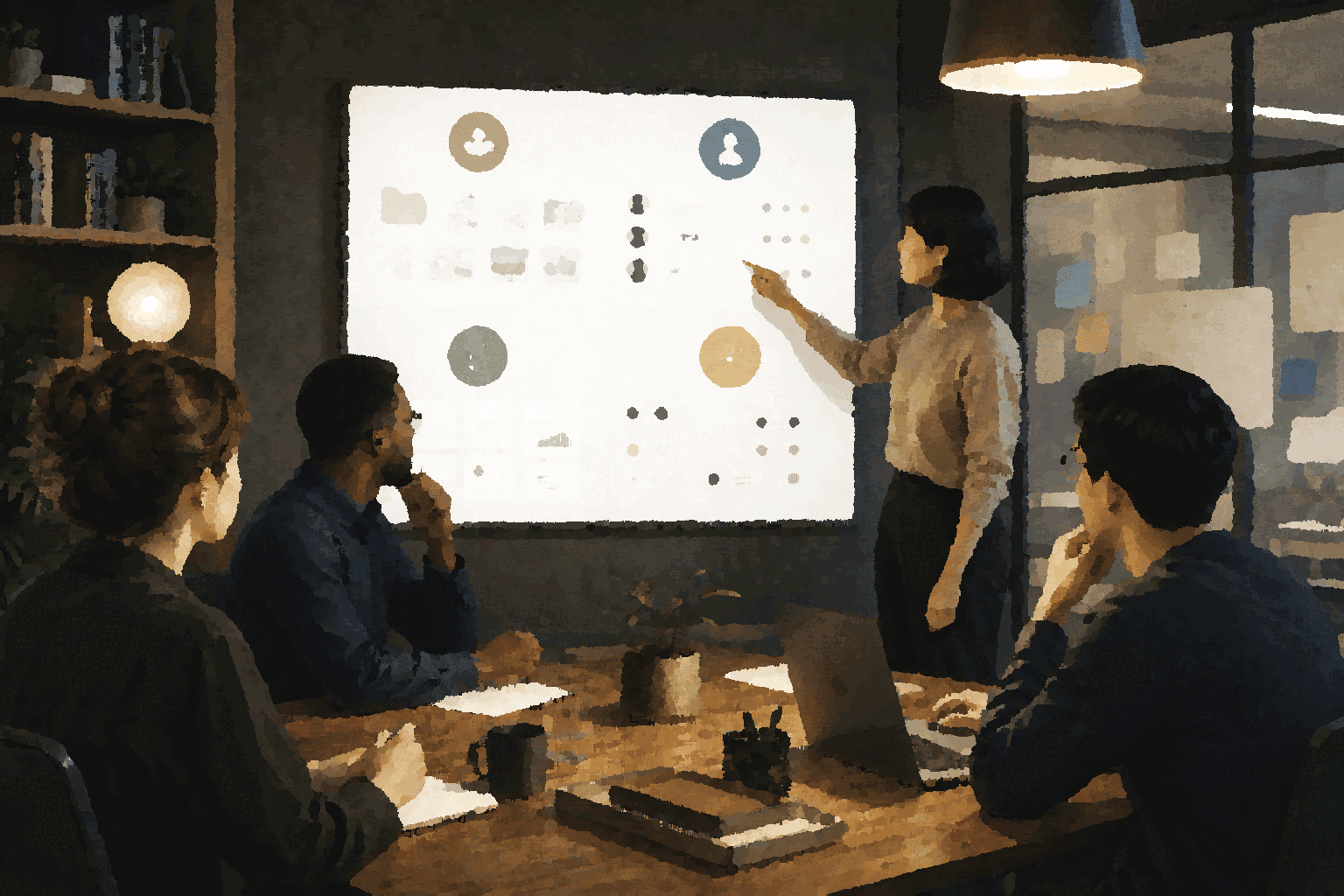
Multiple AI participants are useful when they represent different lenses.
One participant can summarize messy context. Another can challenge assumptions. Another can prepare an execution checklist. Another can inspect for trust or policy issues.
This is not magic. It is structured division of cognitive labor.
The key is not the number of participants. It is whether each one contributes a distinct, reviewable function inside the room.
The value comes from making the lenses explicit and reviewable. If the challenge participant raises a concern, the room should see it. If the execution participant proposes a next step, the team should approve it. If the summary participant misses a point, people should correct it.
The mesh should make reasoning visible, not mysterious.
Why multiple humans still matter
AI participants can process context quickly, but they do not own the stakes.
People bring customer reality, founder judgment, taste, ethics, relationships, and responsibility. In a serious collaboration system, those human contributions should not be flattened into prompts.
The mesh should help people contribute at the right level:
- founders deciding strategy,
- operators shaping sequence,
- advisors challenging assumptions,
- customers grounding the use case,
- AI participants helping preserve context and produce artifacts.
The product succeeds when those roles reinforce each other.
The minimum viable proof
A thought mesh does not need to launch as a universal platform.
The first proof can be narrow:
- A small team enters one room.
- The room has relevant messy context.
- A participant agent helps turn that context into a decision brief.
- The brief names the owner, unresolved question, accepted assumption, and proposed follow-through step.
- A second lens challenges or improves the brief.
- The team approves one bounded follow-through step.
- The output remains durable and inspectable.
That proof is strong precisely because it stays small enough to inspect end to end. If the team cannot understand the context, the roles, the artifact, and the approved next step in one pass, the mesh is still too abstract.
That is a real demonstration of shared intelligence.
It is also explainable in five minutes.

The commercial discipline
Architecture language should not outrun the launch promise.
It is fine to use "Thought Mesh" internally as a way to think about multi-human, multi-agent collaboration. Externally, the first product story should stay concrete: a shared workspace being built so people and AI participants can work from the same context, with visible trust, durable artifacts, and bounded follow-through.
Thought Mesh is one way the platform can grow over time. It should not become the headline before the buyer understands the workspace.
The point
The future of AI collaboration is not just better prompts.
It is shared work where people and AI participants can reason together, produce something durable, and move through bounded next steps without losing context.
That is the mesh worth building.