

Much of the first wave of AI at work made individuals faster.
Every person opened their own AI tab. They asked questions, drafted notes, summarized calls, wrote code, and generated ideas. The productivity gain was real.
But the collaboration problem remained.
The work was still scattered across private conversations, meeting notes, documents, chats, and task tools. The AI helped one person move faster, but the team still had to reassemble the context later.
That is the gap real-time AI collaboration has to close.
Collaboration is not the same as assistance

An assistant helps one person.
A collaboration system helps a group stay oriented around shared work.
That difference changes the product requirements. It is not enough for AI to answer a prompt well. It needs to work from visible, permissioned room context: the people involved, the prior decisions, the artifact being created, and the trust boundaries around what it can and cannot do.
In other words, AI has to participate from shared context, not from a private side channel.
That does not mean the system watches everything or acts on its own. Real time should mean the relevant context stays available while people work, not ambient surveillance or automatic execution. The room should make participation visible enough that people can see what the AI used, what it produced, and where human approval still matters.
Why shared context matters
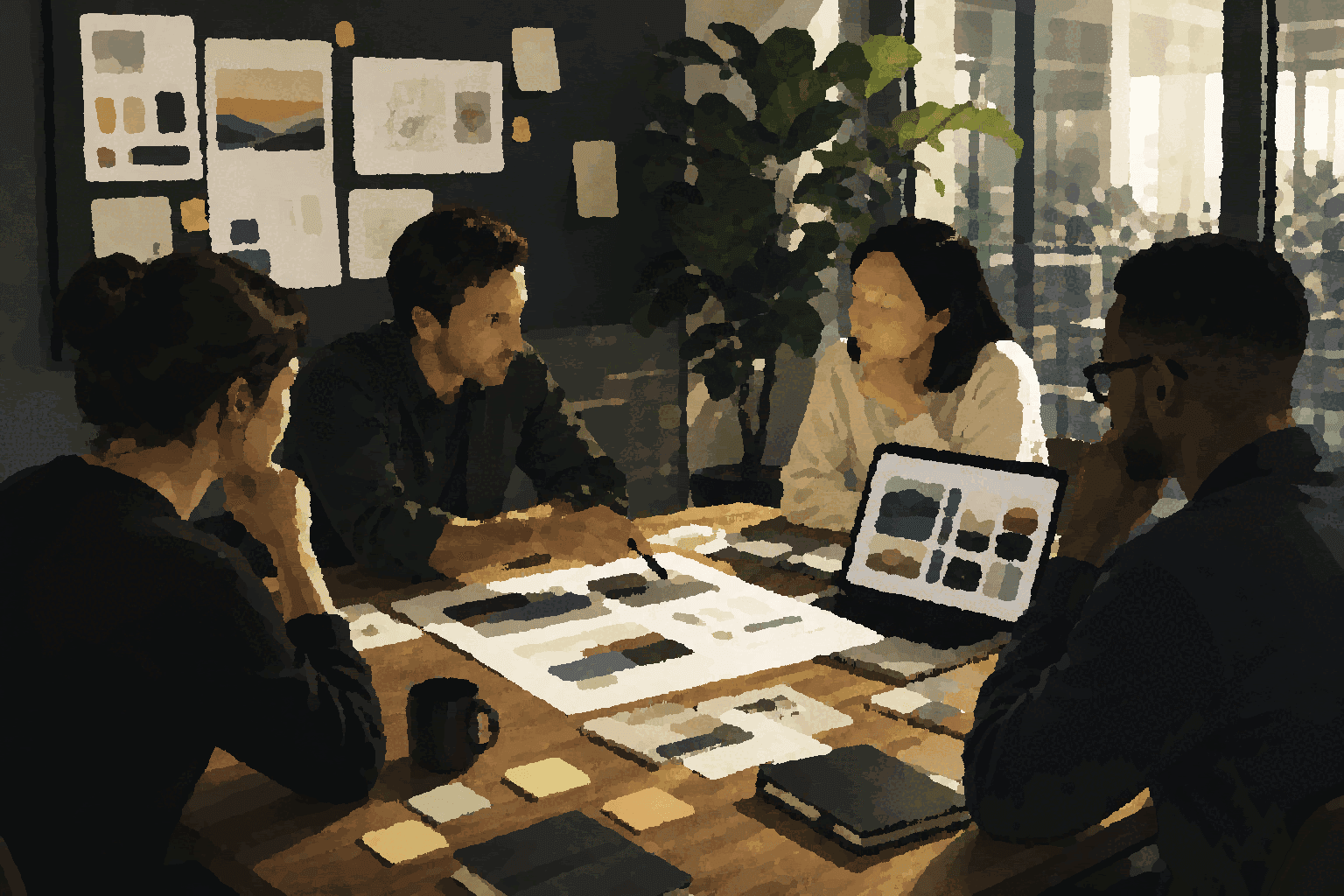
Most teams do not lose momentum because they lack intelligence.
They lose momentum because context leaks. The meeting produced a decision, but no durable artifact. One person has the useful AI output, but nobody else can see the source context. A new teammate joins and has to reconstruct the project from fragments. The next action is implied, but nobody owns it. The same debate returns because the last decision was never captured clearly.
Real-time AI collaboration should reduce those resets.
The system should help turn a messy conversation into a usable brief, keep the history attached to the room, surface unresolved questions, and make follow-through visible without pretending the AI owns the decision.
This is why shared context is not just convenience. It is accountability infrastructure. If the answer came from a transcript, a prior decision, a customer note, or a draft artifact, the team should be able to inspect that path instead of trusting a polished paragraph with no trail.
What makes it different from chat
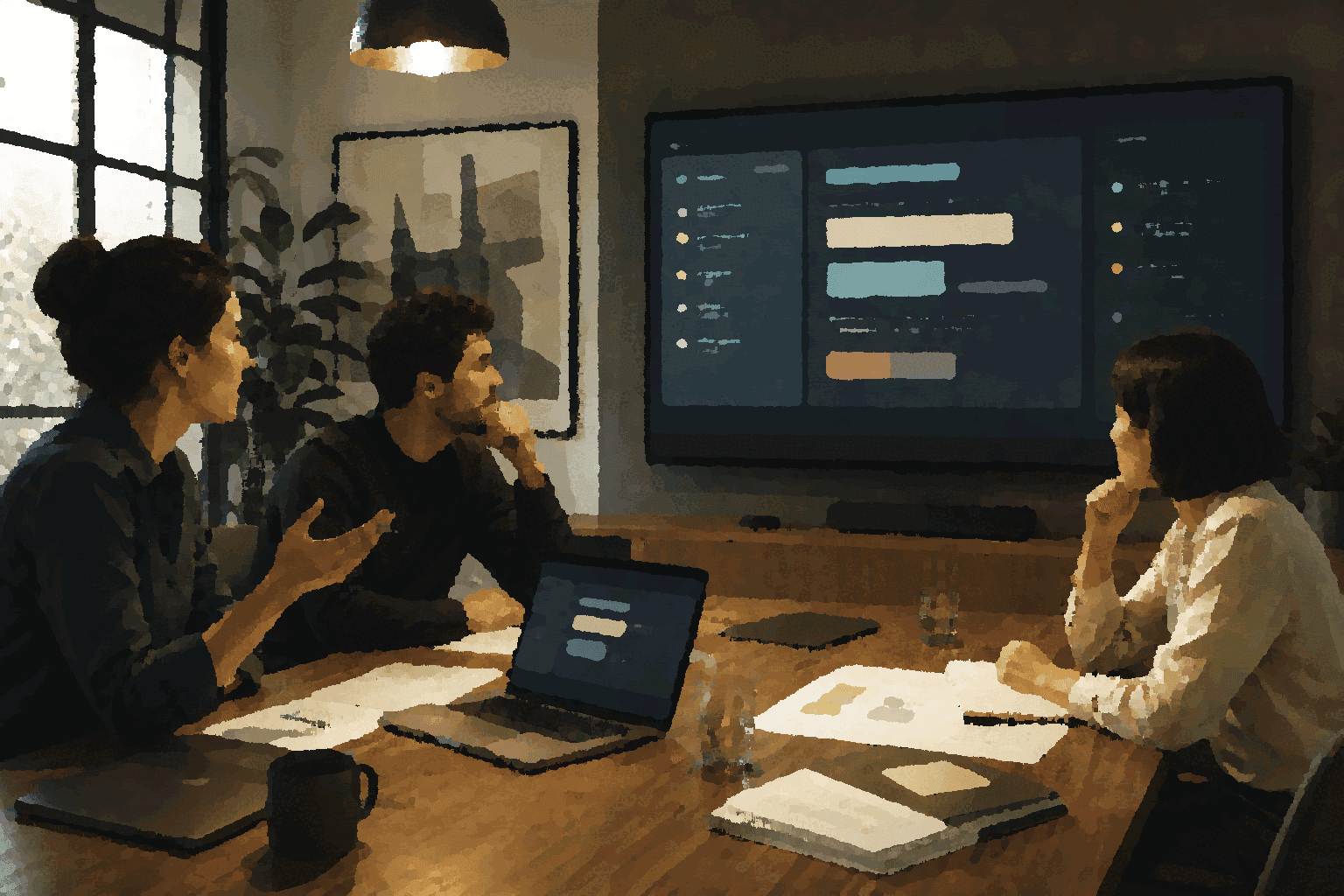
Chat is a surface.
Collaboration is a contract.
A shared AI workspace needs more than a message box. It needs room-aware AI participants, durable outputs, permission-aware context, and bounded action paths. It should help the team move from conversation to artifact to next step.
That is where AI starts to become part of the work, not just a sidecar.
A product review is happening in the room. One person raises a customer objection, another adds a technical constraint, and a third points to the launch deadline. In a normal chat, the thread keeps moving and the useful shape of the decision may disappear into the scroll.
In real-time AI collaboration, the system can draft a brief while the discussion is still alive. It can separate evidence from opinion, name the unresolved question, attach the source context, and leave a proposed follow-up for a person to approve. The useful part is not speed alone. It is that the room can still see what happened.
The human role becomes more important
The point is not to remove people from the loop.
It is to make the loop clearer.
People bring judgment, taste, stakes, relationships, and responsibility. AI can help preserve context, draft options, inspect tradeoffs, and maintain momentum. The best system makes those roles visible instead of blending them into a vague promise of automation.
For work that matters, approval should be explicit. Ownership should be clear. The artifact should be inspectable.
The practical future
The future of AI collaboration will not be proven by saying the model is smarter.
It will be proven by showing a team doing better work together: one room, one visible and permissioned shared context, one durable output, one bounded follow-through path, and one result the team can understand and trust.
That is the shift I care about building toward.
Not another private AI tab.
A shared workspace where people and AI participants work from the same visible, permissioned context, with human ownership still clear.