

A small team leaves a customer call with more momentum than clarity.
The founder asks one AI tab to summarize the opportunity. Product opens another thread to turn the call into requirements. Sales drafts a follow-up from memory. Engineering asks a different model to think through the integration risk. An advisor replies by email with the concern nobody can ignore.
By the next morning, everyone has useful output.
Nobody has the whole room.
The summary is in one place. The product reasoning is in another. The follow-up has a slightly different story. The risk analysis is missing customer nuance. The advisor concern is sitting outside the shared context entirely.
That is the strange new failure mode showing up in modern work.
Everyone is using AI. Everyone is moving faster. And somehow the team can still end up less aligned than before.
That is the real limitation of the assistant model.
The important unit of serious AI work is not the prompt.
It is the room.
I have felt this problem most sharply as a founder: the faster the team moves with AI, the more important it becomes to preserve the context behind the movement.
The assistant model was a useful first step. One person asks. AI answers. Work moves forward.
But real work is not one person asking one assistant in one private tab. Real work is messy, social, cumulative, and full of judgment. It depends on shared memory, visible tradeoffs, clear decisions, and trust about who is allowed to do what.
The next step is not just better assistants. It is Shared Intelligence: people and AI participants working from visible, permissioned shared context, with durable outputs and clear boundaries for what AI can suggest, preserve, and prepare for human approval.
Why private AI threads break team context
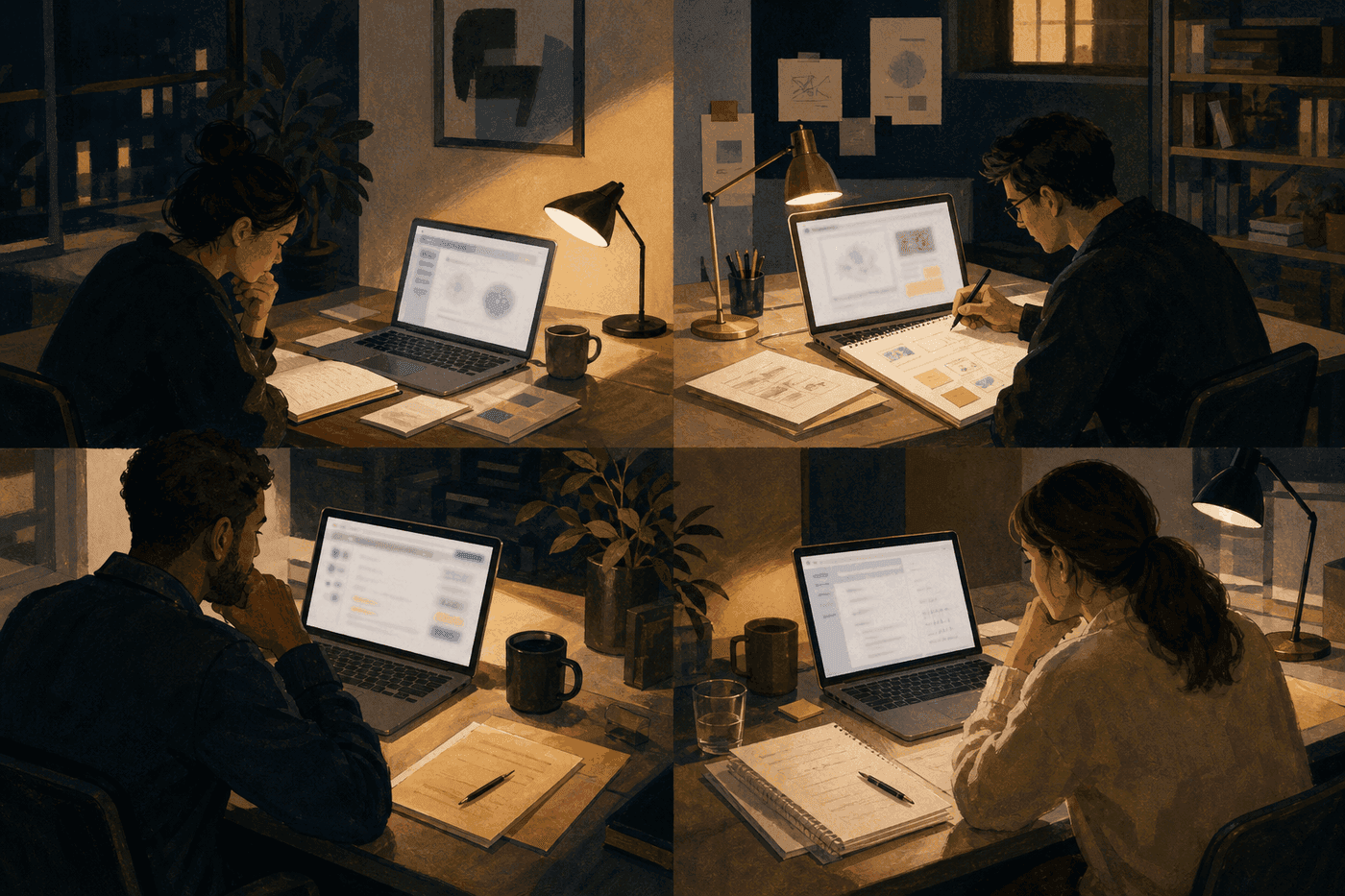
The assistant model helped millions of people understand what modern AI can do. It made AI approachable. Ask a question, get an answer. Paste a draft, get a revision. Describe a task, get a starting point.
But the model starts to break down the moment work depends on more than one person's private context.
Today, too much AI work still follows the same brittle pattern. One person asks for help, gets a useful answer in a private thread, pastes the result into a document, Slack message, email, task, or deck, and leaves the next person to reconstruct the source context, tradeoffs, and history behind the output.
That is not how strong teams work.
Strong teams build shared understanding over time. They remember why a decision was made. They challenge assumptions. They turn messy conversations into artifacts. They know when someone is exploring, committing, deciding, or asking for help.
AI needs to participate in that kind of work, not sit outside it.
The room is the new unit of AI work
Memory matters, but memory alone does not solve collaboration.
A private AI thread with better memory is still private. A smarter chatbot is still a chatbot. A retrieval system that finds old documents is still not the same thing as a shared working context the team can inspect, correct, trust, and return to.
The deeper problem is that most AI tools are not designed around the social structure of work.
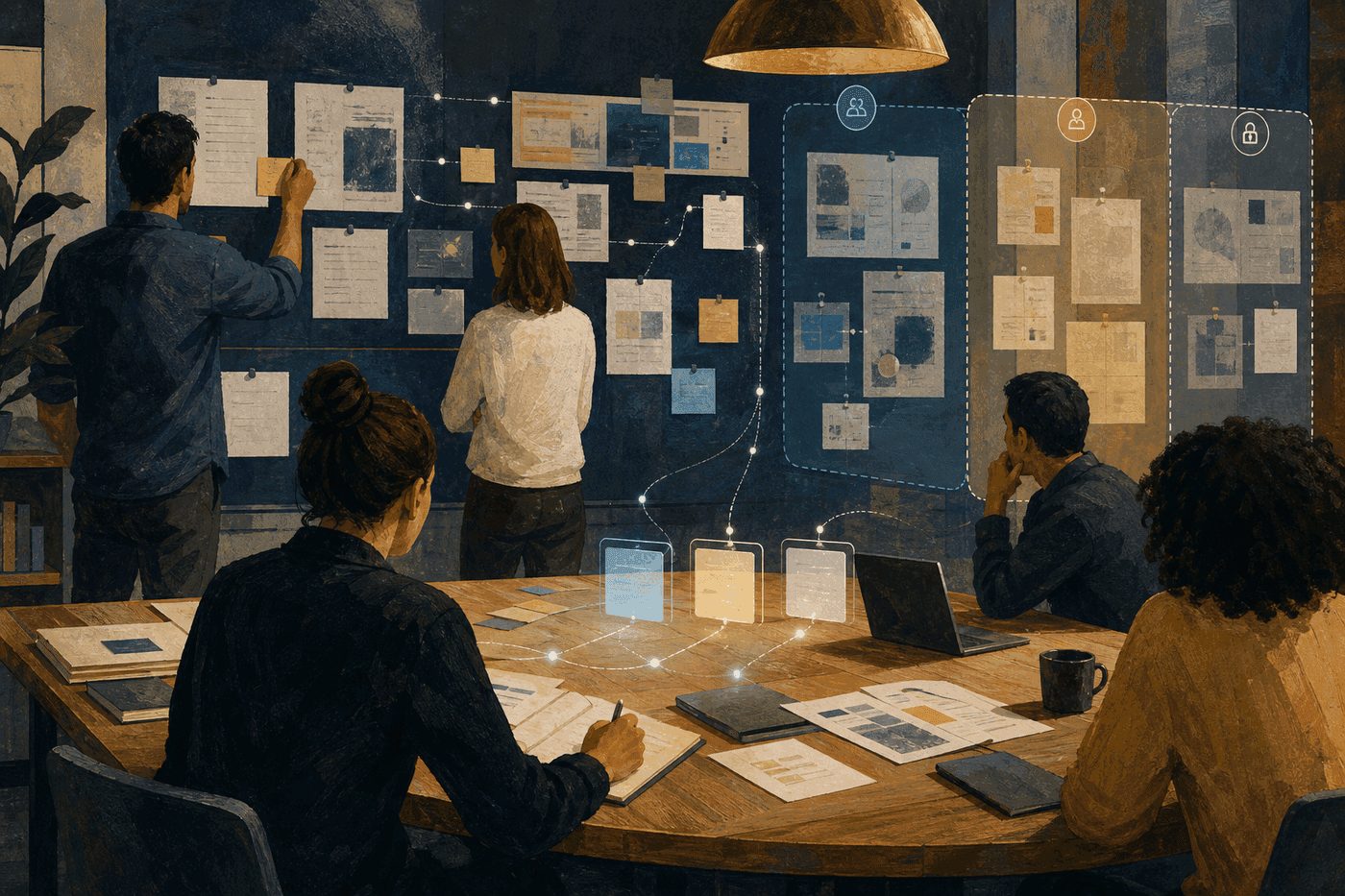
A room is not just a chat thread. It is the people, AI participants, source material, decisions, open questions, artifacts, permissions, and approval boundaries around a piece of work.
Without explicit room context, AI does not know who is involved, which output the team is building toward, what has been approved, what is tentative, what is sensitive, or what should not be acted on without a human decision.
Designed well, the room gives AI enough context to be useful and gives people enough visibility to trust it.
What a real AI collaborator should do
When I think about the best human collaborators I have worked with, they were not valuable because they waited politely for instructions or produced perfect first drafts.
They were valuable because they understood the mission, remembered the history, noticed patterns, and pushed the work forward without taking over.
That is a better target for AI.
An AI participant should help the way a strong teammate helps. It should understand the room, carry source material forward, turn conversation into artifacts, surface risks, adapt to the role it has been given, and stop clearly at the boundary of human approval.
The important part is not that AI pretends to be human.
It is that AI becomes more useful inside human work.
People bring judgment, taste, values, intuition, lived experience, and accountability. AI brings speed, recall, synthesis, pattern recognition, and tireless exploration. The best systems will not pretend those strengths are the same. They will make the differences productive.
What this looks like in practice
Take the customer call from the opening.
The assistant version is: "Summarize this call." Helpful, but limited.
The collaborative version is different. The room already contains the transcript, prior customer notes, the ICP decision the team made last week, the current product brief, the integration constraints, and the follow-up draft the customer will actually receive.
In that context, AI can do more than summarize. It can say:
"This customer request is valuable, but it conflicts with the ICP you chose last week. If you pursue it, the product brief and follow-up email should both name that tradeoff. Do you want me to prepare a revised brief for review?"
That is not just a better answer.
It is bounded participation in the work.
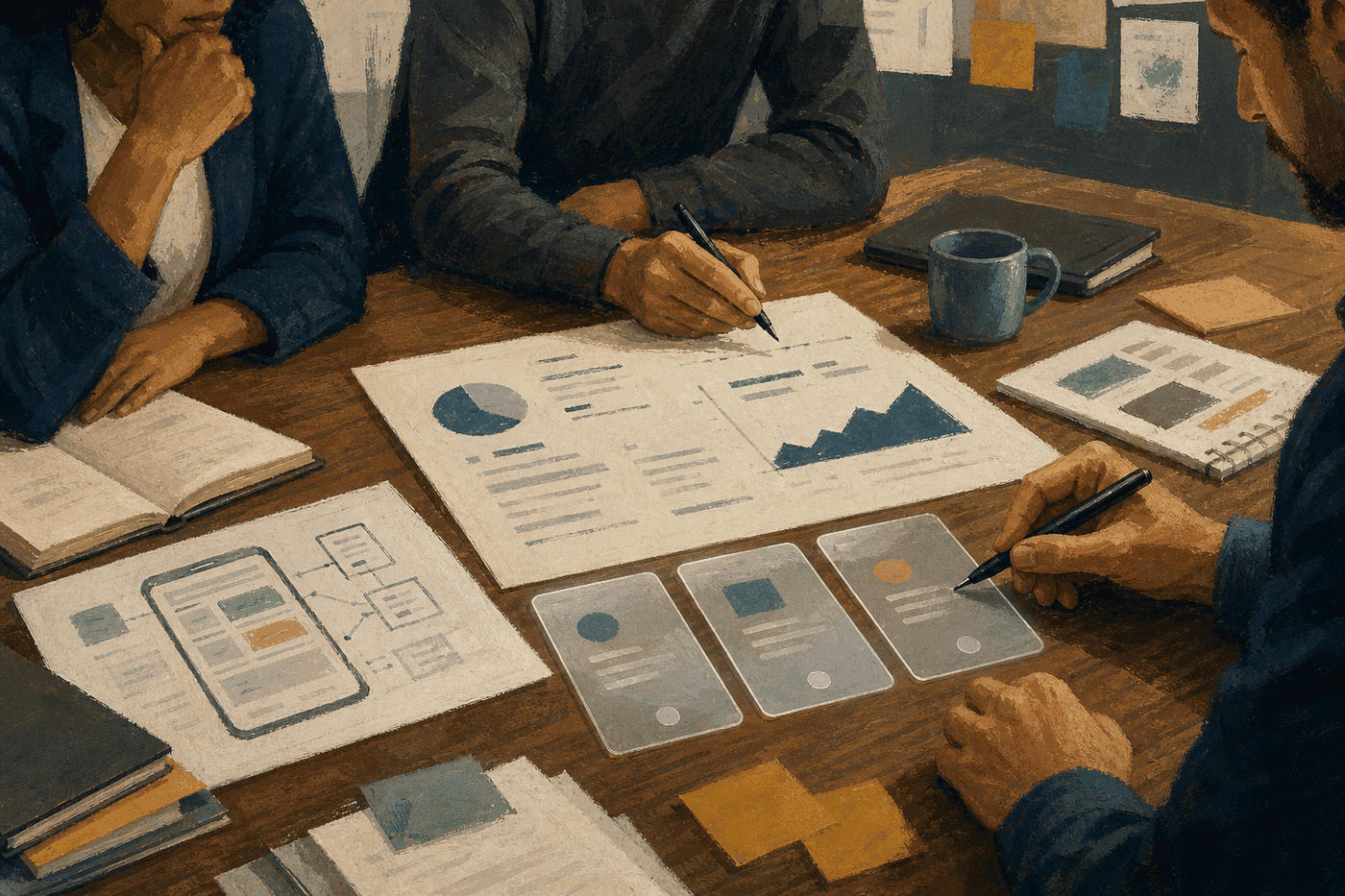
Take product work.
The assistant version is: "Write user stories from this feature idea."
The collaborative version is: "Here are the three user problems this feature appears to solve. One is launch-critical, one is later-wave, and one is probably a distraction. Do you want me to turn the first one into a product brief?"
Again, the difference is not just output quality. It is context, continuity, and judgment support.
That is the kind of shift I am building toward with Sociail.
Not one person prompting one assistant in one private tab, then pasting the result somewhere else.
A shared room where people and AI participants can see the relevant context, produce durable artifacts, preserve decisions, and stop clearly at the boundary of human approval.
The interface has to change
If AI collaboration is going to become real, the interface cannot remain only a private chat box.
Chat is a good input surface. It is not enough as the whole workspace.
Teams need shared rooms where conversations can become artifacts, artifacts can carry rationale, suggestions remain reviewable, and approvals are visible. The interface has to show not just what AI produced, but what it used, what it changed, and where human judgment is still required.
This is why I keep thinking in terms of shared workspaces, not assistant windows.
The product question becomes: how do we let AI participate without letting it blur accountability?
That requires design, not just model capability.
Trust is part of the product

The more useful AI becomes, the more trust has to be designed into the workflow.
AI should be able to help draft, synthesize, compare, and recommend. In many cases, it should also prepare follow-through. But there is a difference between preparing action and taking action. There is a difference between remembering useful context and quietly storing everything. There is a difference between surfacing a suggestion and pretending it has authority.
Those distinctions need to be visible.
If AI is going to participate in team work, people need to know what the AI used, where the context came from, what it is allowed to do, what still requires approval, and what has changed since the last decision.
This is not a side issue.
It is central to making shared AI work usable in serious work.
From "I ask" to "we think"
The assistant era is mostly about individual acceleration. One person gets help faster. That is powerful, but it is not enough.
The next era is about Shared Intelligence. A team gets better at thinking together because AI is present in the same context, helping preserve continuity, expose tradeoffs, and turn conversation into work that lasts.
The best AI products will not simply make people faster at producing more isolated output. They will help teams build clearer shared understanding. They will make work easier to resume. They will reduce re-explaining. They will make decisions easier to inspect.
That is the collaboration layer I want to see exist.
Not AI as a servant.
Not AI as a replacement.
AI as a bounded participant in human work: present enough to help, constrained enough to trust, and connected enough to preserve the work the team is actually doing.
The assistant era was built around private prompts.
The next era will be built around shared rooms.
That is the move beyond the AI assistant.