

Most collaboration tools were built around humans talking to other humans.
That sounds obvious, but it matters. Email, Slack, Zoom, docs, project boards, and CRMs all assume the same basic pattern: people create the context, people maintain the memory, people connect the dots, and software moves the pieces around.
AI changes that assumption.
Not because AI replaces the team. That is the lazy version of the story.
The more interesting shift is that bounded AI participants can begin working from the team's visible, permissioned context. They can help preserve the thread, synthesize, compare, draft, challenge, and turn messy work into durable outputs.
That is why I think collaboration is entering a third wave.
Wave one: same room
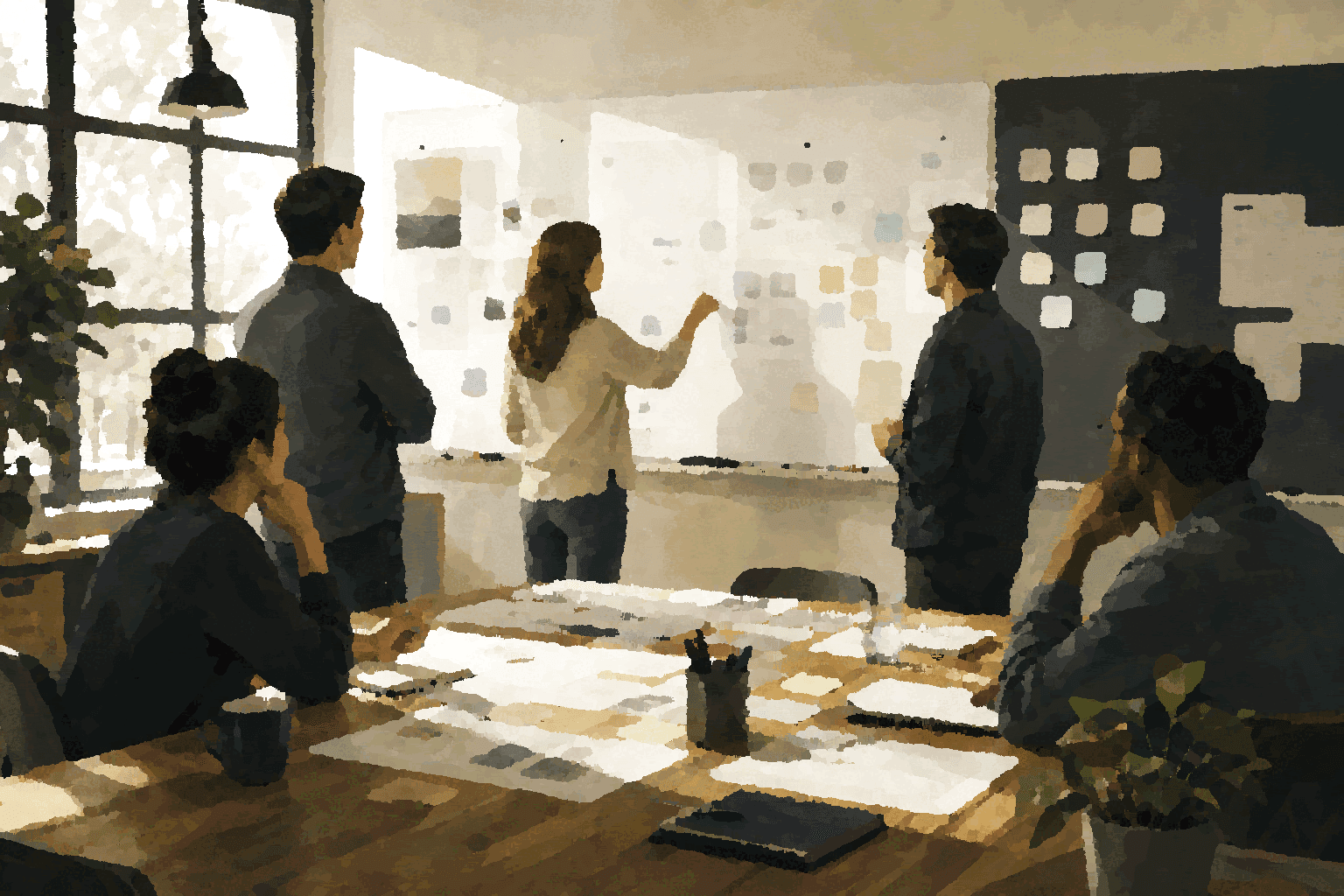
The first wave of collaboration was physical.
People gathered in the same room. They shared a table, a whiteboard, a hallway, a lab, a classroom, or a conference room. The advantage was context. Everyone could see the same artifacts. You could read the room. You knew when a decision had really landed and when people were just nodding.
I still believe there is something powerful about this kind of collaboration. Some of my best company-building memories are not the clean milestones. They are the messy rooms: whiteboards full of arrows, people arguing in good faith, someone catching the missing assumption five minutes before the plan became real.
The room mattered because the disagreement, the sketch, the pause, and the decision were all in the same place. You could see when the artifact changed the conversation. You could tell when a decision had an owner.
The weakness was obvious. Physical collaboration did not scale well across geography, time zones, or long-term memory. If you were not in the room, you missed more than the transcript. You missed the context.
Wave two: digital tools
The second wave moved collaboration online.
Email made work asynchronous. Shared documents made editing multiplayer. Slack compressed team communication into channels. Zoom made remote work viable for teams that previously depended on physical presence.
This wave changed the world.
It also scattered the work.
The strategy conversation lives in Slack. The actual decision lives in a doc. The task lives in a project board. The customer context lives in a CRM. The meeting recording lives somewhere else. The source context behind the decision lives mostly in people's heads.
A new teammate joins the project and asks a simple question: why did we choose this launch path?
The answer is not in one place. It is spread across three channels, a meeting recap, a spreadsheet, and one sentence in a customer note that everyone remembers differently.
Digital collaboration solved distance, but it created fragmentation.
That fragmentation is now the default condition of knowledge work. Teams are connected, but the context is split across too many surfaces. Everyone spends too much time reassembling the work before they can actually do the work.
Wave three: shared AI context

The third wave is not simply "AI inside every app."
That is already happening, and it is useful. But if every tool gets its own isolated AI feature, we may just create a smarter version of the same fragmentation problem.
The deeper shift is people and bounded AI participants working from the same visible room context, history, artifacts, and trust boundaries.
In this wave, AI is not just a sidebar that answers prompts for one user. When it can see the work the team is actually doing, it can help with what has already been decided, what remains unresolved, and what output needs to exist at the end.
That changes the collaboration pattern.
Instead of asking, "Can AI write this for me?" the better question becomes:
Can AI help the team preserve context, compare tradeoffs, produce artifacts, and prepare follow-through for human approval?
That is a much bigger product and design problem than adding a chatbot to a workflow.
What makes this wave different
The third wave will not be recognized by the presence of an AI button.
It will be recognized by what no longer has to be reconstructed: the question, the tradeoff, the decision, the artifact, and the boundary around action.
Context becomes shared instead of trapped in one person's private prompt history. Outputs become durable instead of disappearing as disposable chat transcripts. Trust becomes visible because suggestions, decisions, and actions are not blurred together.
Role clarity matters too. Not every AI-supported workflow should behave the same way. A research workflow, a product workflow, an operator workflow, and a meeting workflow need different scopes, boundaries, and expectations.
That is why the third wave is not just about intelligence.
It is about collaboration design.
The practical shift
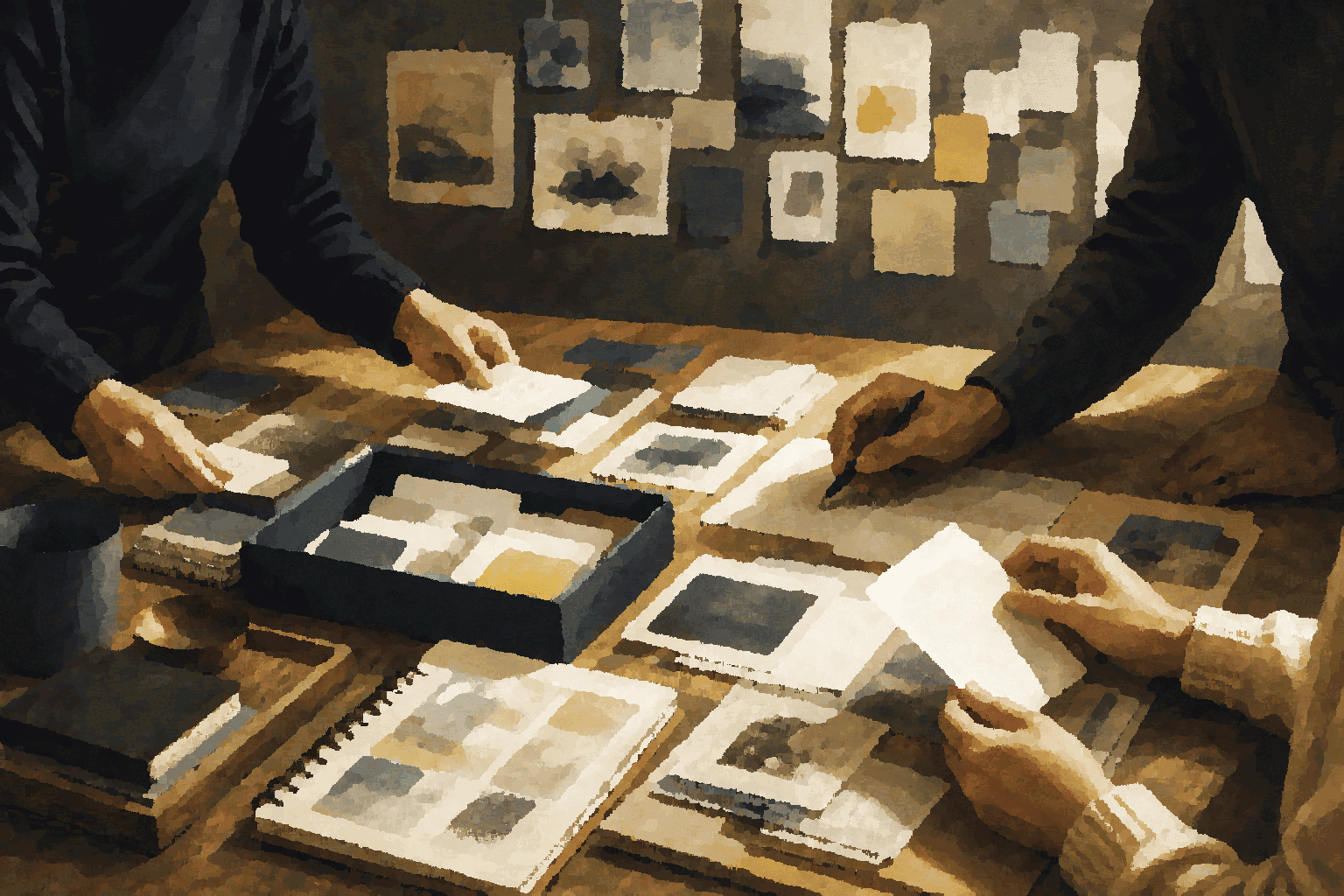
Imagine a team trying to make a launch decision.
In the second wave, they might discuss it in Slack, draft a doc, hold a meeting, create tasks, and then lose half the source context a week later.
In the third wave, the shared workspace helps preserve the decision trail. Bounded AI participants can summarize tradeoffs, flag contradictions, connect the current decision to previous assumptions, and prepare the execution pack for review.
The human team still decides.
The AI does not become the accountable owner.
But the work becomes easier to resume, inspect, and move forward.
That is the point.
The most valuable AI collaboration will not be the flashiest demo. It will be the system that reduces the tax of re-explaining, reassembling, and rediscovering what the team already knows.
What teams need to learn
This third wave requires new habits.
Teams will need to be clearer about what is exploratory versus decided. They will need to define when AI can draft, when it can recommend, and when it must ask for approval. They will need to treat context as a shared asset, not a private side effect of individual work.
They will also need to protect the human parts of collaboration.
Judgment still matters. Taste still matters. Trust still matters. The fact that AI can summarize large bodies of material does not mean it understands what the team should care about. The fact that AI can prepare an action does not mean it should take the action.
The winning teams will not be the ones that hand everything to AI.
They will be the ones that learn where AI belongs in the room.
The collaboration layer ahead
The first wave gave us presence.
The second wave gave us reach.
The third wave should give us shared intelligence.
Not a replacement for human collaboration, and not just another productivity feature. A new layer where people and bounded AI participants can work from visible, permissioned context, preserve what matters, and help teams turn conversation into durable progress.
The practical test is simple: can the team return next week and understand what was decided, why it was decided, what evidence was used, who owns the next step, and what AI is allowed to prepare next?
That is the collaboration problem worth solving now.